Accessibility Tools

Number 1 Skin Cancer & Pre-Cancer Care

D. Pre-Cancerous Lesions

• Field Cancerization Treatment

1. What Is Field Cancerization?

Field cancerization refers to areas of skin that have been chronically damaged by ultraviolet (UV) exposure, even if individual spots are not always visible. In these areas, the skin contains multiple precancerous changes that increase the risk of developing actinic keratoses (AKs) and squamous cell carcinoma (SCC) over time.

Rather than treating one visible lesion at a time, field cancerization treatment targets the entire sun-damaged area, helping treat both visible and invisible precancerous cells.

Common areas include:

  • Face and forehead

  • Scalp (especially in balding areas)

  • Ears

  • Forearms

  • Backs of the hands

2. Why Field Treatment Is Important

Spot-treating individual AKs alone may miss early precancerous cells in the surrounding skin. Field treatment helps to:

  • Reduce the number of existing AKs

  • Treat subclinical (not yet visible) precancerous cells

  • Lower the risk of progression to skin cancer

  • Improve overall skin texture and health

  • Reduce the need for repeated procedures over time

3. Common Field Cancerization Treatments

Your dermatologist will recommend a treatment based on your skin type, extent of sun damage, and medical history.

a) Topical Prescription Therapies

Applied at home over a prescribed period to treat sun-damaged skin.

  • Targets abnormal cells across the entire field

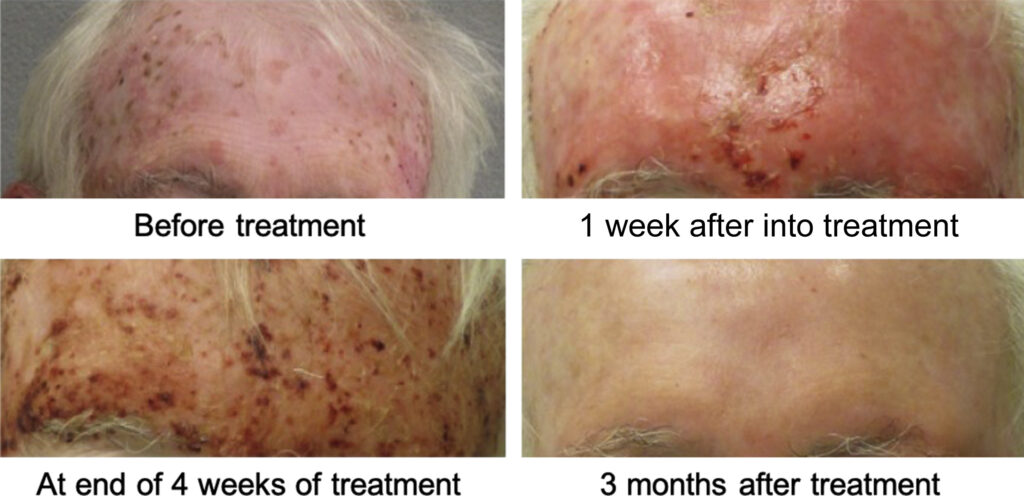
  • Causes controlled inflammation as damaged cells are cleared

b) Photodynamic Therapy (PDT)
  • A light-sensitive medication is applied in the office

  • After an incubation period, a specific light activates the medication

  • Selectively destroys precancerous cells while sparing healthy tissue

c) Combination Approaches

Some patients benefit from combining treatments (for example, topical therapy followed by PDT) for enhanced results.

4. Pre-Op Instructions (Before Field Cancerization Treatment)

a) General Preparation
  • Inform your dermatologist if you:

    • Take medications that increase sun sensitivity

    • Have a history of severe reactions to topical treatments

    • Are immunosuppressed or have a history of skin cancer

b) Before Topical Field Therapy
  • Plan ahead: visible redness, peeling, and irritation are expected

  • Avoid scheduling major social events during active treatment

  • Stop using retinoids, exfoliants, or harsh skincare products unless instructed otherwise

c) Before Photodynamic Therapy (PDT)
  • Arrive with clean skin (no makeup, sunscreen, or moisturizers on the treatment area)

  • Avoid sun exposure the day of treatment

  • Bring sun-protective clothing (wide-brim hat, long sleeves)

5. Post-Op Instructions (After Field Cancerization Treatment)

a) What to Expect

Healing varies depending on the treatment type, but common reactions include:

  • Redness and swelling

  • Crusting or peeling

  • Burning or stinging sensation

  • Temporary darkening or lightening of the skin

These reactions indicate the treatment is working.

b) After Topical Field Therapy
  • Use only skincare products recommended by your dermatologist

  • Avoid sun exposure and tanning

  • Do not pick or peel treated skin

  • Moisturize as directed to support healing

c) After Photodynamic Therapy (PDT)

⚠️ Critical: Avoid bright light and direct sunlight for the exact period instructed (often 24–48 hours)

Additional care:

  • Use gentle cleansers

  • Apply soothing moisturizers as recommended

  • Protect skin with hats and protective clothing

  • Sunscreen should only be applied when cleared by your dermatologist

d) When to Call the Office

Contact us if you experience:

  • Severe pain or blistering

  • Signs of infection (spreading redness, warmth, pus, fever)

  • Symptoms that are worsening instead of improving after several days

e) Long-Term Skin Care & Prevention

Field treatment is part of a long-term skin cancer prevention strategy. To maintain results:

  • Use daily broad-spectrum sunscreen

  • Wear sun-protective clothing and hats

  • Avoid tanning beds

  • Continue regular full-body skin exams

Frequently Asked Questions

Is field cancerization treatment the same as treating individual AKs?

No. Field treatment addresses the entire sun-damaged area, including early precancerous changes that are not yet visible.

Not necessarily. Field cancerization means the skin has sustained significant sun damage and contains precancerous changes. Treatment helps reduce future cancer risk.

Recovery depends on the treatment used and the area treated. Visible reactions may last from several days to a few weeks.

Yes. Redness, peeling, and crusting are common during treatment. These changes are temporary and part of the healing process.

No treatment can eliminate all risk, but field therapy significantly reduces the burden of precancerous cells and lowers future cancer risk when combined with sun protection and regular exams.

Discomfort varies. Topical treatments may cause burning or itching, while PDT can cause temporary stinging during light activation. Your dermatologist can help manage discomfort.

Yes. Many patients benefit from periodic field treatment as part of ongoing skin cancer prevention.

Coverage often depends on medical necessity and treatment type. Our office can help review your insurance benefits.