Number 1 Skin Cancer & Pre-Cancer Care

D. Pre-Cancerous Lesions

• Actinic Keratosis (AK)

1. What is an Actinic Keratosis?

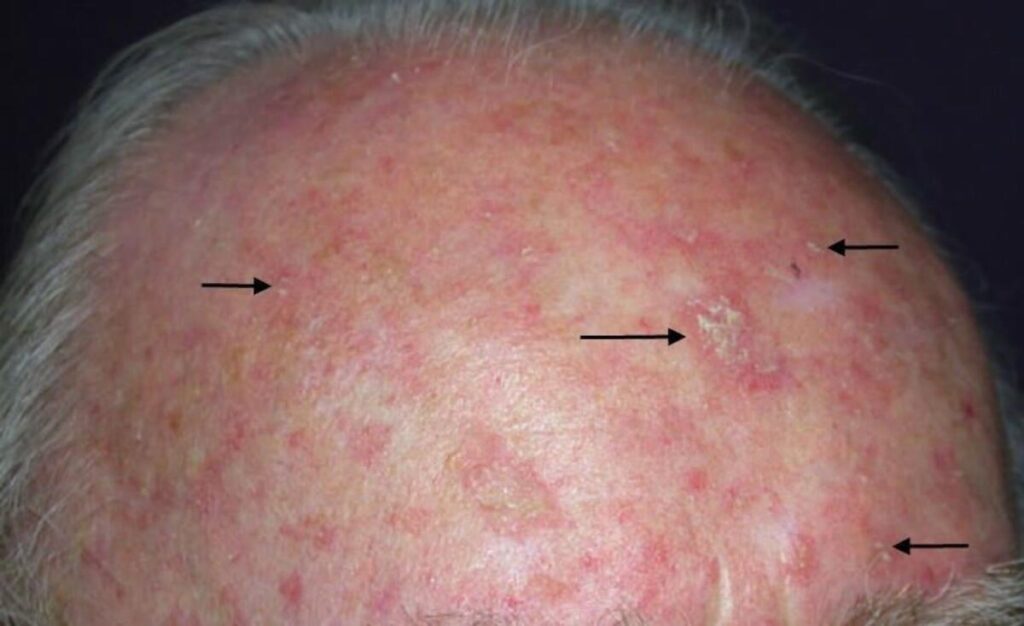
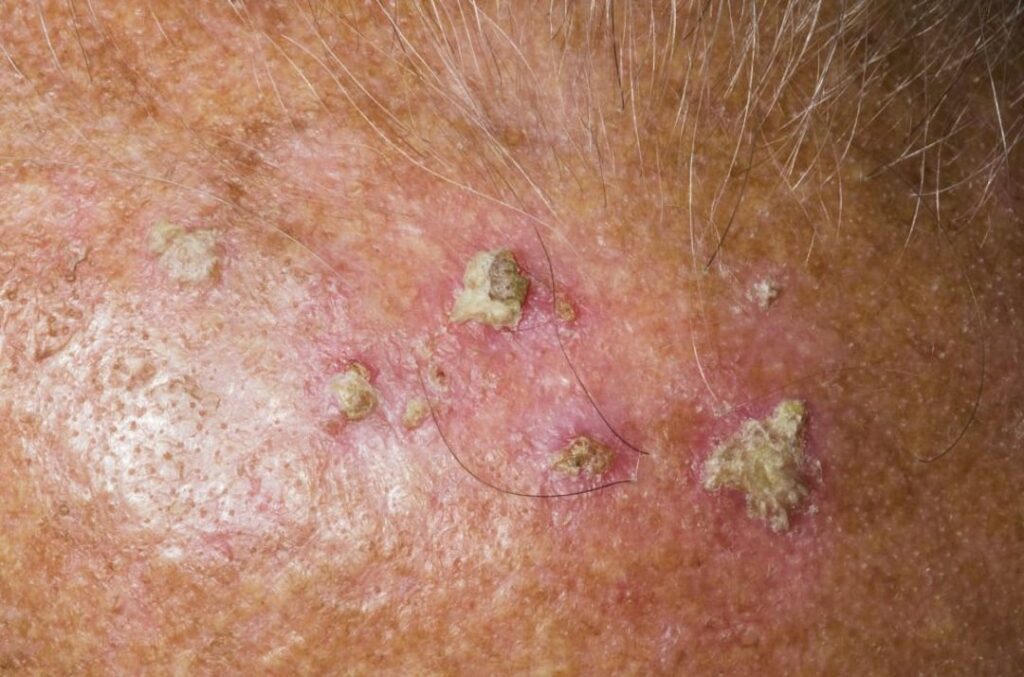
An actinic keratosis (AK) is a precancerous growth caused by long-term UV exposure from the sun or indoor tanning. AKs commonly feel like rough, scaly patches and often appear on sun-exposed areas such as the face, scalp, ears, forearms, and backs of the hands.

AKs are treated because some can progress to squamous cell carcinoma (SCC) over time.

2. What do AKs look and feel like?

AKs can appear as:

  • Rough, sandpaper-like spots (sometimes easier to feel than see)

  • Red, pink, tan, or skin-colored patches

  • Scaly or crusted areas

  • Occasionally tender, itchy, or burning

3. Why AKs matter

Having AKs means your skin has had significant UV damage, and you may be at increased risk for skin cancer, which is why ongoing skin exams are important.

4. How AKs are diagnosed

AKs are often diagnosed with a skin exam (sometimes using dermoscopy). If a spot looks thicker, rapidly changing, painful, ulcerated, or “different,” your dermatologist may recommend a biopsy to rule out skin cancer.

5. Treatment Options

Your dermatologist will recommend treatment based on the number of AKs, location, and how thick they are.


Spot Treatments

Cryotherapy (Freezing)

Liquid nitrogen freezes the AK so the damaged cells slough off as the skin heals. It’s one of the most common in-office treatments.

Curettage or Shave Removal (Selected cases)

Used for thicker AKs or when SCC needs to be ruled out (often followed by pathology).

Field Treatments (for “sun-damaged areas” with multiple AKs)

If you have many AKs in one region (like the scalp, forehead, or forearms), your dermatologist may recommend a “field” approach—treating the broader area where AKs form.

Common options include:

  • Prescription topical therapies

  • Photodynamic therapy (PDT) (medicine applied, then activated by a specific light)

(Your dermatologist will recommend what fits your skin, schedule, and risk.)

6. Pre-Op Instructions (Before AK Treatment)

Before Cryotherapy (Freezing)
  • No fasting is needed.

  • Tell us if you:

    • Take blood thinners or bruise easily

    • Have allergies to adhesives or topical products

  • Avoid applying lotion/makeup directly over the area the day of treatment.

Before Topical “Field Therapy” (if prescribed)
  • Let us know if you have a history of severe reactions to topical medications.

  • Plan for temporary redness/irritation (timing varies by medication and treatment plan).

Before PDT (if scheduled)
  • Arrive with clean skin (no makeup, sunscreen, or heavy moisturizers on the treatment area).

  • Plan your day so you can avoid bright light/sun exposure afterward as instructed by your office.

7. Post-Op Instructions (After AK Treatment)

After Cryotherapy

Normal expectations:

  • Redness, swelling, stinging for a short time

  • A blister may form, then crust and heal

Care:

  • Keep it clean; gentle soap and water is fine.

  • Don’t pick at scabs.

  • Call the office if you have increasing redness, warmth, pus, or worsening pain.

After Topical Field Therapy

Normal expectations:

  • Redness, dryness, peeling, crusting (this can mean the medication is working)

Care tips:

  • Use only products your dermatologist recommends on the treated area.

  • Avoid harsh exfoliants, retinoids, or acids unless approved.

  • Strict sun protection is essential.

After PDT

Normal expectations:

  • Redness and sensitivity (similar to a sunburn), sometimes swelling and peeling

Critical instruction:

  • Avoid bright light/sun exposure for the exact timeframe your office provides.

8. Prevention & Long-Term Care

  • Daily broad-spectrum sunscreen

  • Hats / sun-protective clothing

  • Avoid tanning beds

  • Regular skin exams to monitor for new AKs or skin cancer

Frequently Asked Questions

Are Actinic Keratoses (AKs) skin cancer?

AKs are precancerous—not skin cancer—but some can develop into squamous cell carcinoma, which is why treatment and monitoring are recommended.

AKs are a sign of cumulative UV damage. Even after treatment, new AKs can develop over time, especially on chronically sun-exposed areas.

Most patients feel a brief stinging or burning sensation. Tenderness afterward is usually mild and temporary.

Most AK treatments heal well. Some people may notice temporary color change or a small mark, especially after freezing. Your dermatologist will recommend an approach that balances effectiveness and cosmetic outcome.

Healing depends on the treatment and the body area. Many cryotherapy spots heal over 1–3 weeks; field treatments and PDT may involve a longer visible recovery period.

Call if you notice:

  • Rapid growth, increasing pain, ulceration, or bleeding

  • A spot that doesn’t heal

  • Signs of infection (spreading redness, warmth, pus, fever)