
 Skin Cancer & Pre-Cancer Care
A. Skin Cancer Diagnosis
Skin Cancer & Pre-Cancer Care
A. Skin Cancer Diagnosis
- Full Body Skin Exams
- Dermoscopy
- Mole Mapping
Skin Biopsy
B. Skin Cancer Types
- Basal Cell Carcinoma (BCC)
- Squamous Cell Carcinoma (SCC)
- Melanoma
- Merkel Cell Carcinoma
- Cutaneous T-Cell Lymphoma (CTCL)
- Primary Cutaneous B-Cell Lymphoma (PCBCL)
- Metastatic Cancers
- Sarcoma
C. Skin Cancer Treatment
- Mohs Micrographic Surgery
- Surgical Excision
- Electrodessication & Curettage(ED&C)
- Radiation Referral Coordination
D. Pre-Cancerous Lesions
- Actinic Keratosis (AK)
- Atypical(Dysplastic) Nevi
- Field Cancerization Treatment
- Photodynamic Therapy (PDT)
 Medical Dermatology
(Chronic & Inflammatory Skin Diseases)
 Pigment & Lesion Disorders
 Non-Cancer Growth
 Surgical Dermatology (Non-Cancer Procedures)
 Cosmetic Dermatology
• Skin Biopsy
What Is a Skin Biopsy?
A skin biopsy is a quick in-office procedure where a dermatologist removes a small sample of skin to be examined under a microscope. It helps diagnose a wide range of conditions, including:
Suspicious moles or growths (to rule out skin cancer)
Precancerous lesions
Chronic rashes and inflammatory skin disease
Infections and unusual skin changes
A biopsy provides the most accurate diagnosis so treatment can be targeted and appropriate.
Why a Skin Biopsy Is Recommended
Your dermatologist may recommend a biopsy if a spot:
Is new, changing, or looks different from others
Bleeds, crusts, or doesn’t heal
Has irregular borders or multiple colors
Persists despite treatment
Is part of an unexplained or chronic rash
3. Types of Skin Biopsies
Your dermatologist chooses the method based on the location, size, and suspected diagnosis:
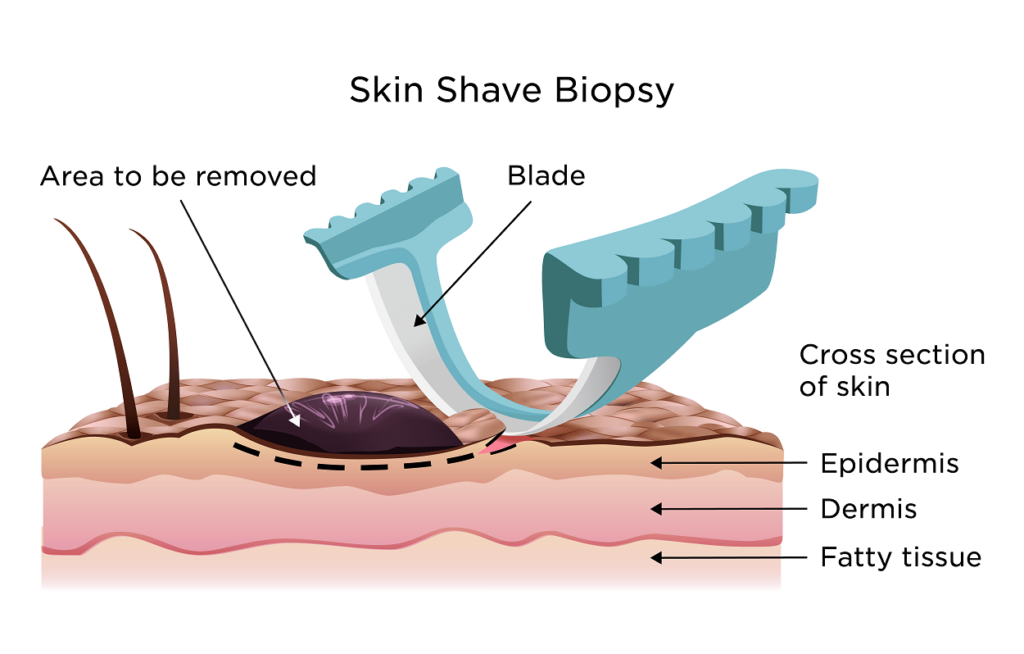
Shave Biopsy
Removes the top layers of skin. Often used for raised lesions.
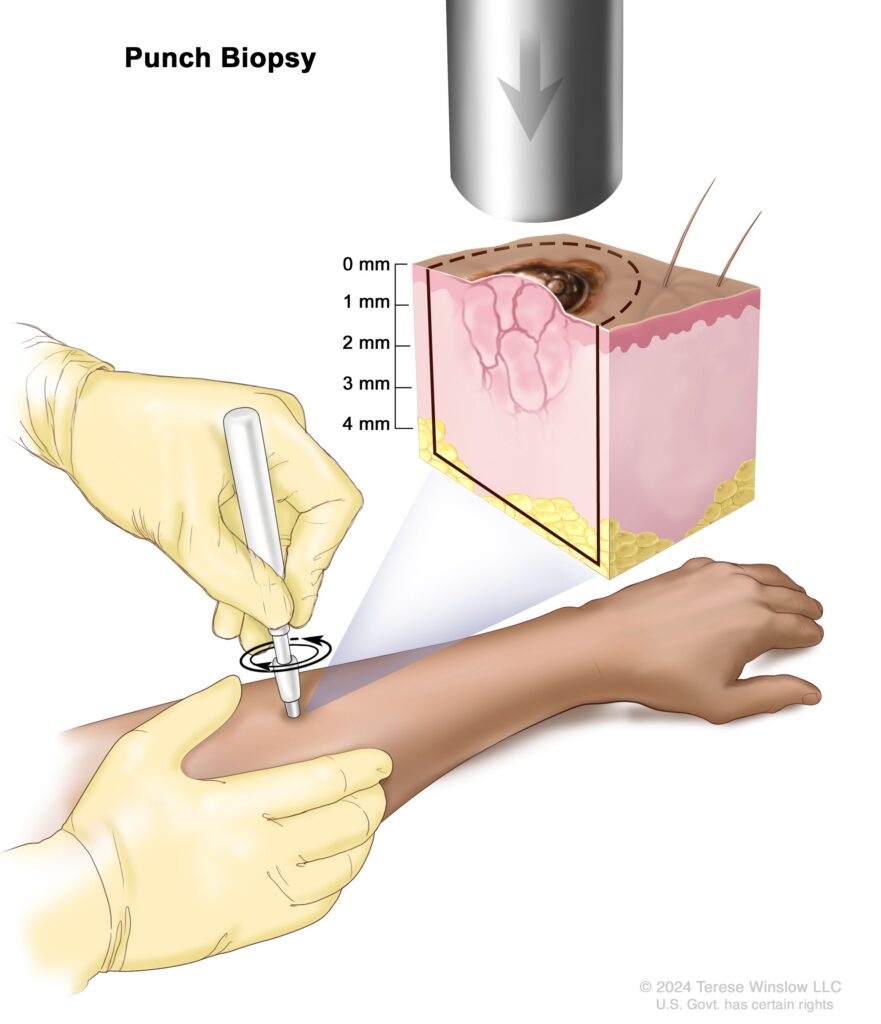
Punch Biopsy
Uses a small circular tool to remove a deeper sample. Often used for rashes or inflammatory conditions.
Excisional Biopsy
Removes the entire lesion with a margin of normal skin. Used when complete removal is recommended.
Pre-Op Instructions (Before Your Skin Biopsy)
What to Tell Your Dermatologist
Before your biopsy, please let us know if you:
Take blood thinners (e.g., aspirin, warfarin, clopidogrel, apixaban, rivaroxaban)
Have a bleeding disorder
Have a pacemaker/defibrillator (rarely relevant, but good to know)
Have allergies to medications, bandages, or antiseptics
Are pregnant or breastfeeding (for medication planning)
⚠️ Do not stop any prescribed blood thinner unless instructed by the prescribing physician.
One week before
- Stop drinking alcohol (due to blood thinning effect of alcohol)
- Stop smoking
- stop fish oil supplement
- avoid optional aspirin and NSAIDS: Ibuprofen (Advil®, Motrin®), Naproxen (Aleve®), Aspirin (Bayer®), etc…
What to Expect During the Procedure
A skin biopsy is typically fast and done in the office:
The area is cleaned
Local anesthetic is given (you may feel a brief pinch/burn)
The skin sample is removed
Bleeding is controlled
A bandage is applied
Stitches may be placed depending on biopsy type and depth
Most patients are able to return to normal daily activities right away.
Post-Op Instructions (After Your Skin Biopsy)
a) Wound Care (General Instructions)
Follow the specific instructions given by your dermatologist, but typical care includes:
For the first 24 hours
Keep the bandage on and the area dry (unless told otherwise)
After 24 hours (daily care)
Wash hands
Gently clean the site with mild soap and water
- Pat dry
Apply a thin layer of ointment (as instructed)
Cover with a clean bandage
Continue daily until the site is fully healed or stitches are removed.
b) Activity Restrictions
Avoid heavy exercise, stretching, or swimming until advised, especially if stitches were placed
Showering is usually okay after 24 hours, but avoid soaking the area (baths/hot tubs) unless cleared
c) Normal Healing vs. Warning Signs
Normal
Mild soreness
Slight redness around the site
Clear or light pink drainage
A small scab
d) Call our office if you notice
Increasing redness, warmth, swelling, or pus
Fever or chills
Persistent bleeding that won’t stop
Increasing pain after the first day
Red streaking from the biopsy site
e) Bleeding: What to Do
If bleeding occurs:
Apply firm pressure with clean gauze for 15 minutes without checking
If still bleeding, repeat for another 15 minutes
If bleeding continues after 30 minutes of pressure, contact the office
When Will I Get Results?
Results are often available within 1 week plus, depending on the lab and complexity of the case. Our office will contact you about 2 weeks with results and next steps.
👉 If there is a rushed pathology report, patient will usually incur a significant out-of-pocket lab fee.
Will I Have a Scar?
Any biopsy can leave a small scar. Proper wound care and keeping the area moist and covered during healing can help the final appearance.
Frequently Asked Questions
Does a skin biopsy hurt?
The biopsy is performed with local anesthesia. You may feel a brief pinch/burn from the numbing medication, but the procedure itself is usually not painful.
How long does a skin biopsy take?
Most biopsies take only a few minutes, with additional time for preparation and aftercare instructions.
Will I need stitches?
Not always. Shave biopsies typically do not require stitches. Punch and excisional biopsies may require stitches depending on depth and location.
Can I drive myself home afterward?
Yes. A skin biopsy is a minor in-office procedure and does not affect your ability to drive.
Can I shower after a biopsy?
Usually after 24 hours—but avoid soaking the area (baths/hot tubs/swimming) until cleared by your dermatologist.
What if my biopsy bleeds?
Apply firm pressure for 15 minutes. If bleeding continues after 30 minutes of pressure, contact the office.
What happens if the biopsy result shows skin cancer?
If skin cancer is diagnosed, we will discuss the most appropriate treatment options, which may include excision, Mohs surgery, or other therapies based on location and type.
Why do some biopsies come back “atypical”?
Some lesions show changes under the microscope that are not cancer but may warrant monitoring or complete removal. We will explain your result clearly and recommend the safest next step.
How should I care for the scar?
Keep the wound clean, moist (as directed), and covered during healing. After the skin has closed, sun protection on the area can help the scar fade.