

• Broken Blood Vessels (Telangiectasias)
(Visible enlarged facial capillaries and small surface blood vessels)
What Are Broken Blood Vessels (Telangiectasias)?
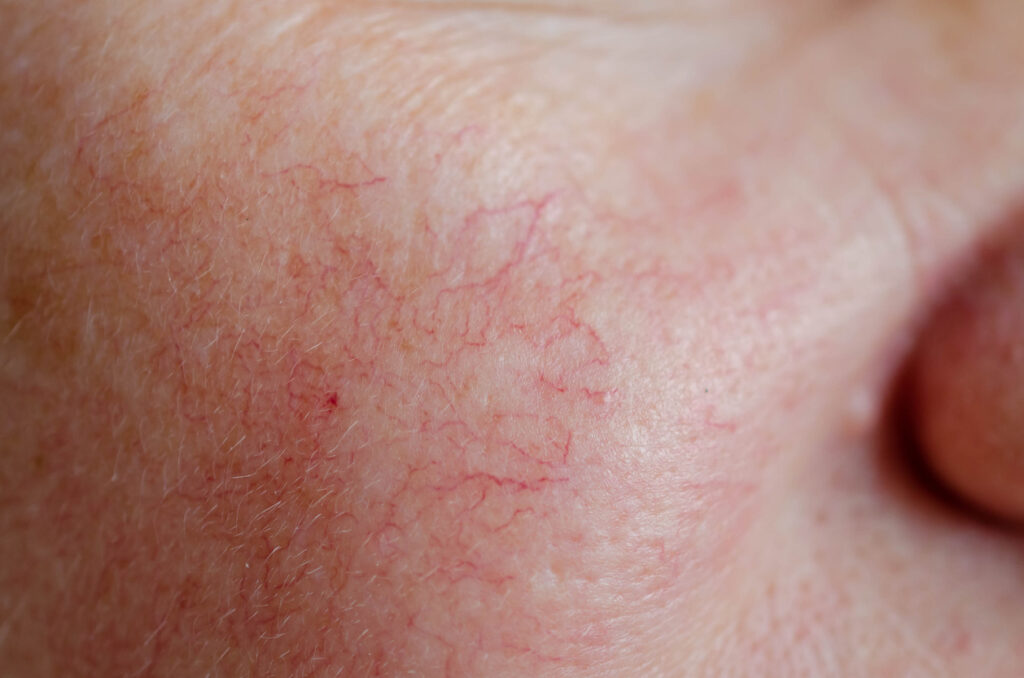
Telangiectasias are tiny enlarged blood vessels located near the surface of the skin. They are commonly called:
- Broken blood vessels
- Broken capillaries
- Facial veins
- Spider veins on the face
They often appear as:
- Thin red lines
- Web-like vessels
- Persistent redness
Common areas include:
- Nose
- Cheeks
- Chin
- Around the nostrils
What Causes Broken Blood Vessels?
Several factors may contribute, including:
- Sun damage
- Rosacea
- Aging
- Fair skin
- Genetics
- Repeated facial flushing
- Steroid overuse on the face
- Chronic irritation or inflammation
Some people develop them gradually over time without a clear trigger.
Are Telangiectasias Dangerous?
Usually no.
They are generally harmless but may become cosmetically bothersome or associated with rosacea and facial redness.
How Are Broken Blood Vessels Treated?
Common treatment options:
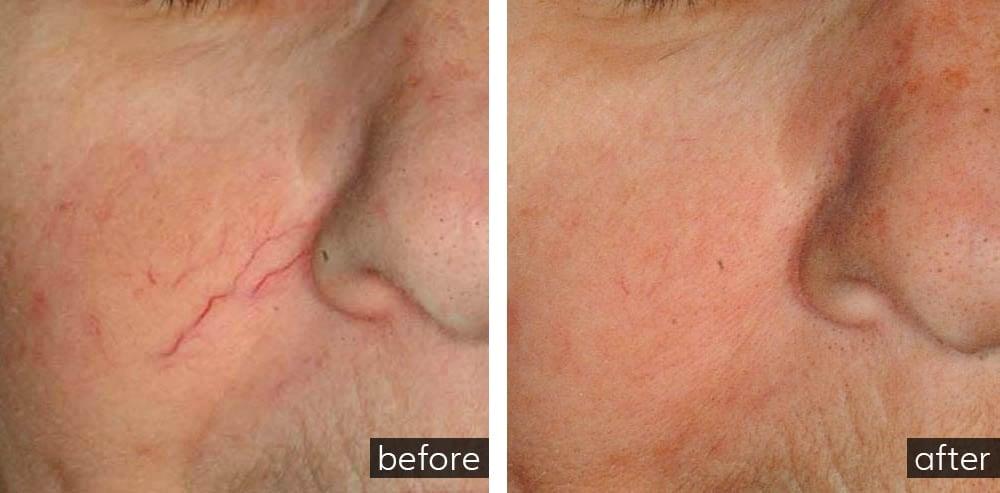
- Pulsed Dye Laser (PDL)
- Vascular laser treatments
- IPL (Intense Pulsed Light) for selected patients
- Treatment of underlying rosacea if present
Laser and light devices target blood vessels while minimizing injury to surrounding skin.
What to Expect During Treatment
- The skin is cleansed
- Protective eyewear is provided
- Laser or light pulses are applied
- Cooling may be used for comfort
- Treatment usually takes about 15–30 minutes
Most patients describe treatment as:
- Mild snapping sensation
- Warmth
- Temporary stinging
When Will I See Results?
- Some vessels fade quickly
- Others improve gradually over several weeks
- Multiple sessions are often recommended for best cosmetic results
Smaller vessels usually respond faster than larger or deeper vessels.
Pre-Op Instructions
(Before laser or light treatment)
2–4 weeks before
- Avoid tanning and excessive sun exposure
- Use broad-spectrum sunscreen daily
- Avoid self-tanners
1 week before
- Avoid irritating skincare products
- Tell us if you:
- Bruise easily
- Take blood thinners
- Have active infection or rash
- Have a history of pigment changes
Day of treatment
- Arrive with clean skin
- Avoid makeup, lotions, or sunscreen on treatment areas
Post-Op Instructions
(After treatment)
What’s normal
- Mild redness
- Temporary swelling
- Slight darkening of vessels
- Mild warmth or sensitivity
Some patients may develop temporary bruising.
Aftercare
- Use gentle skincare products
- Apply sunscreen daily
- Avoid excessive heat, saunas, hot tubs, and strenuous exercise for 24–48 hours
- Avoid scrubbing or picking treated skin
Call the office if
- Blistering develops
- Significant swelling occurs
- You notice signs of infection
- Pigment changes worsen significantly
Frequently Asked Questions
Can Broken Blood Vessels Return?
Treated vessels usually do not return, but new vessels can form over time, especially with:
- Continued sun exposure
- Rosacea
- Chronic flushing
Maintenance treatments may occasionally be helpful.
Are broken blood vessels the same as rosacea?
Not exactly. Rosacea can cause telangiectasias, but not all telangiectasias are due to rosacea.
Can creams remove broken blood vessels?
Topical products may reduce redness, but visible vessels often require laser or light treatments for significant improvement.
Does laser treatment hurt?
Most patients tolerate treatment well. Discomfort is usually brief and mild.
How many treatments will I need?
Many patients benefit from 1–3 sessions, though some require additional treatments.
Will insurance cover treatment?
Treatment is often considered cosmetic, though coverage may vary depending on symptoms and diagnosis.
Can sun exposure make them worse?
Yes. Sun damage is a major contributor to broken facial blood vessels.
Can I prevent new broken blood vessels?
Sun protection, rosacea management, and avoiding excessive facial irritation may help reduce new vessel formation.