

• Ringworm (Tinea Corporis)
(A common fungal skin infection that causes a ring-shaped rash)
What Is Ringworm (Tinea Corporis)?
Despite the name, ringworm is not caused by a worm.
It is a common fungal skin infection caused by dermatophyte fungi that grow in the outer layer of the skin.
“Tinea corporis” refers to ringworm affecting the:
- Arms
- Legs
- Chest
- Back
- Trunk
The infection is common in both children and adults.
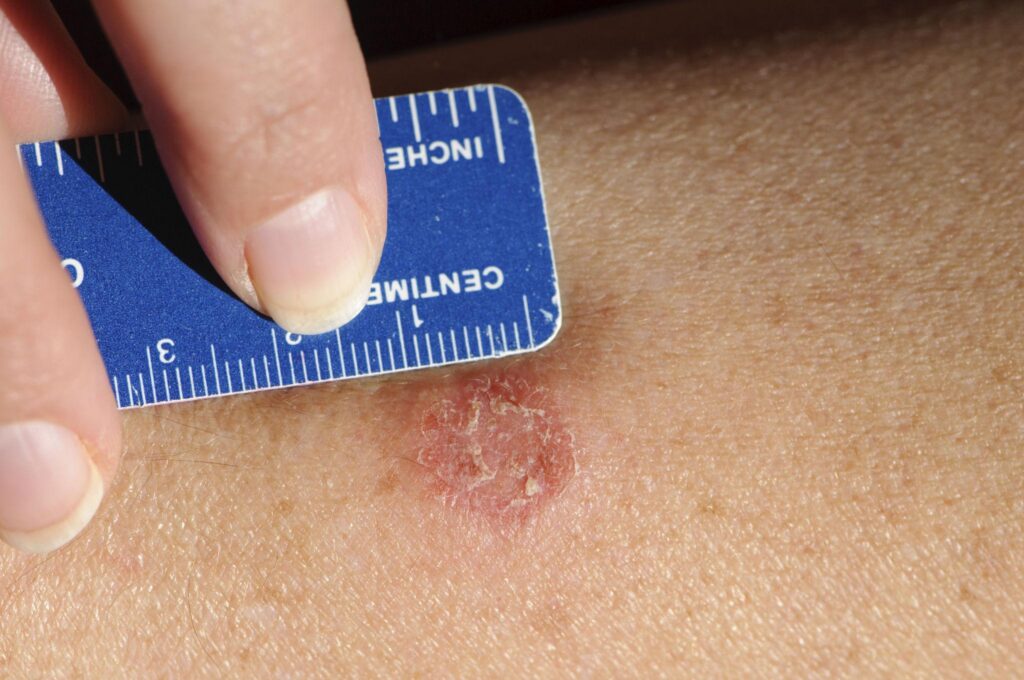
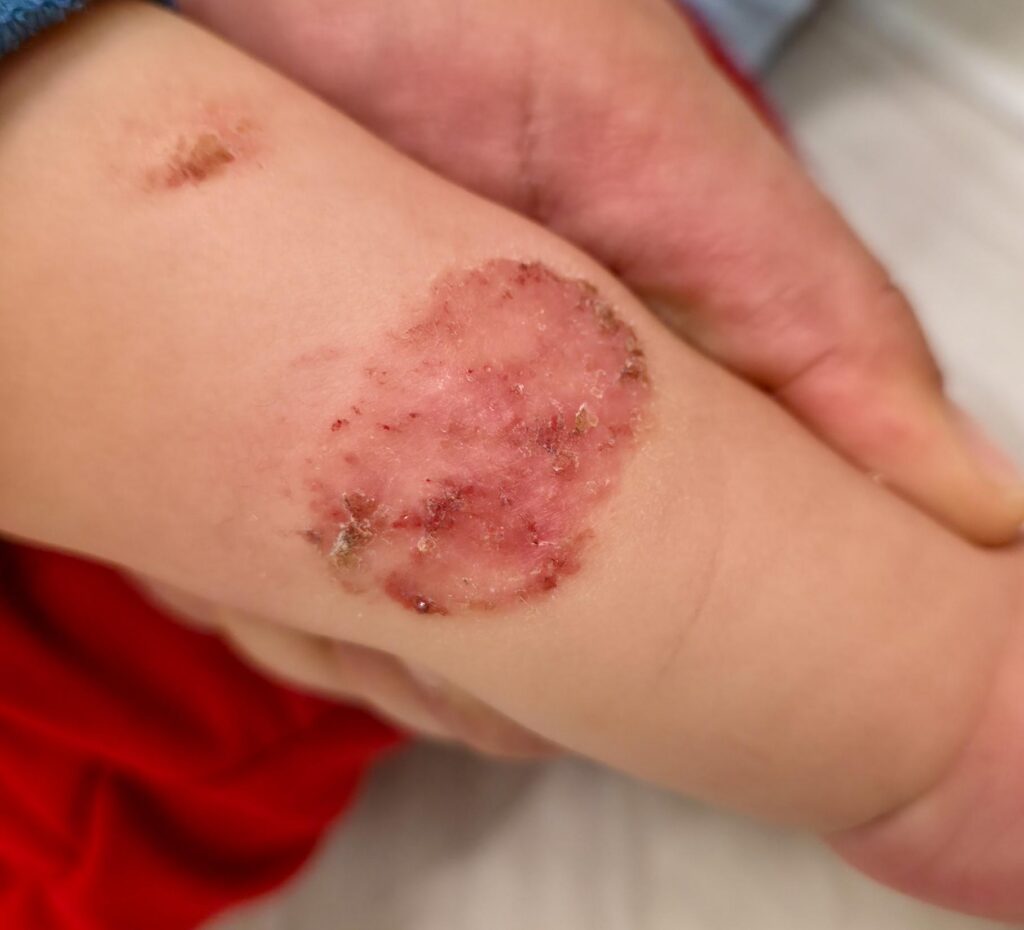
What Does Ringworm Look Like?
Ringworm often appears as:
- A circular or ring-shaped rash
- Red, pink, or darker patches
- Raised or scaly border
- Central clearing (“ring” appearance)
- Itching or irritation
Some rashes may have multiple rings or slowly enlarge over time.
How Does Ringworm Spread?
Ringworm spreads through:
- Skin-to-skin contact
- Shared towels, clothing, or sports equipment
- Contact with infected pets
- Locker rooms or gym surfaces
It is contagious until properly treated.
How Is Ringworm Diagnosed?
A dermatologist can often diagnose ringworm during a skin exam.
Sometimes additional testing may be performed, including:
- Skin scraping
- Microscopic examination
- Fungal culture
This helps confirm diagnosis and rule out eczema, psoriasis, or other rashes.
How Is Ringworm Treated?
Mild cases:
- Prescription or over-the-counter antifungal creams
More widespread or stubborn infections:
- Oral antifungal medication
Important:
Steroid creams alone can worsen fungal infections and may make the rash less recognizable.
Pre-Op Instructions
(Before evaluation or treatment)
- Avoid applying heavy steroid creams unless prescribed
- Keep the area clean and dry
- Avoid scratching the rash
- Tell us if:
- The rash is spreading quickly
- Pets at home have skin problems
- Other household members have similar rashes
- You recently used steroid creams
Arrive with clean skin and avoid applying ointments right before the appointment if possible.
Post-Op Instructions
(After starting treatment)
What’s normal
- Gradual improvement over several weeks
- Mild dryness or peeling during healing
- Itching improving before rash fully disappears
Aftercare
- Use medications exactly as prescribed
- Keep skin dry and clean
- Wash towels, clothing, and bedding regularly
- Avoid sharing personal items
- Continue treatment for the full recommended duration
Call the office if
- The rash worsens
- New areas continue appearing
- Pain, pus, or fever develops
- No improvement occurs after treatment
Frequently Asked Questions
Can Ringworm Leave Scars?
Most cases heal without scarring.
Temporary lighter or darker marks may remain briefly after inflammation resolves.
Why is it called ringworm if there’s no worm?
The name comes from the ring-shaped appearance of the rash.
Is ringworm contagious?
Yes. It spreads through direct contact and shared items.
Can pets spread ringworm?
Yes. Cats, dogs, and other animals can sometimes transmit fungal infections.
Can steroid creams make ringworm worse?
Yes. Steroids can temporarily reduce redness while allowing the fungus to spread more deeply.
How long does treatment take?
Many cases improve within a few weeks, but treatment duration varies depending on severity.
Can ringworm come back?
Yes. Reinfection can occur from untreated contacts, pets, or contaminated items.
Is ringworm dangerous?
Usually no, but untreated infections can spread or become more extensive.