

• Molluscum Contagiosum
(A common viral skin infection causing small, smooth bumps)
What Is Molluscum Contagiosum?
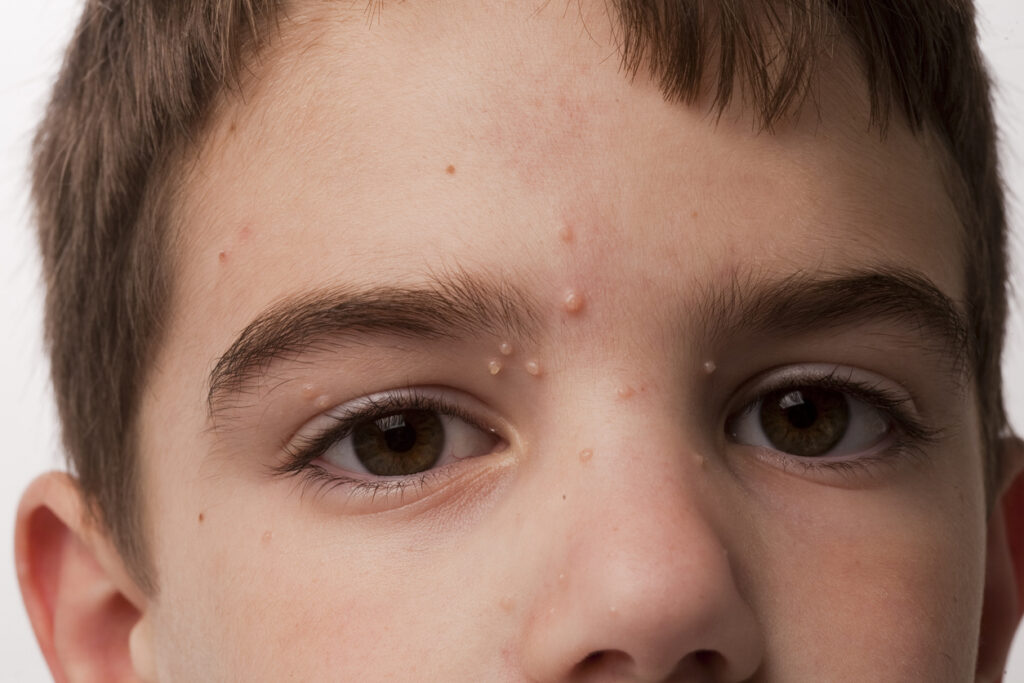
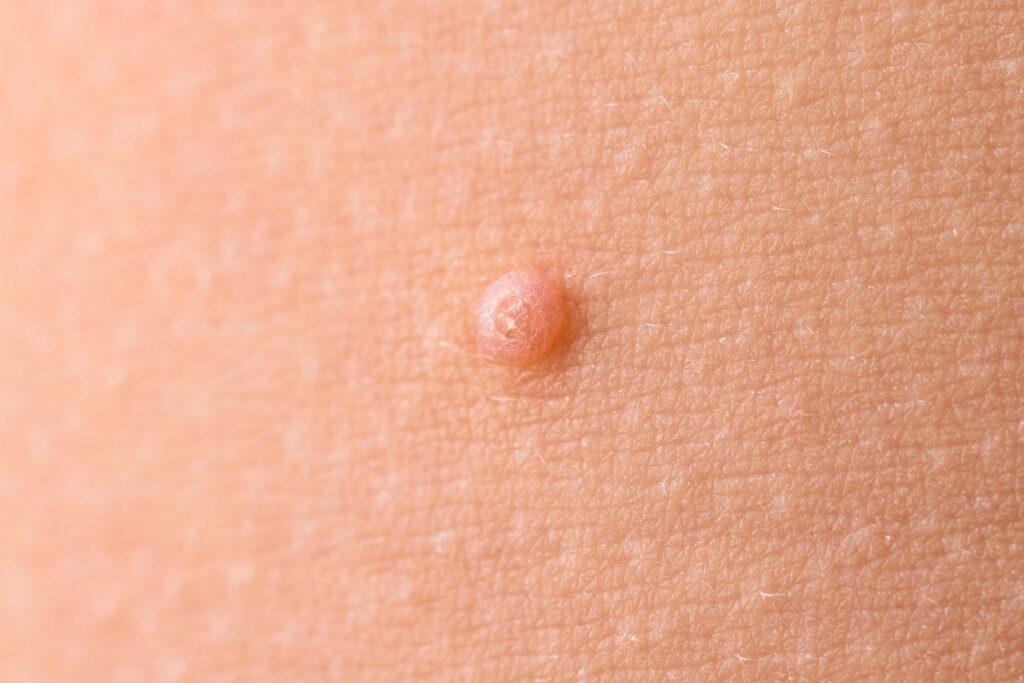
Molluscum contagiosum is a common viral skin infection caused by a poxvirus. It creates small, smooth, dome-shaped bumps that often have a tiny center dimple.
Molluscum is benign and usually not dangerous, but it can spread to other areas of the skin or to close contacts.
What Does Molluscum Look Like?
Molluscum bumps are usually:
- Small, round, and smooth
- Flesh-colored, pink, or pearly
- Dome-shaped
- Sometimes itchy or irritated
- Often have a small central dimple
Common areas:
- Trunk
- Arms
- Legs
- Face
- Skin folds
- Genital area in adults
How Does Molluscum Spread?
Molluscum spreads through:
- Skin-to-skin contact
- Scratching or shaving over bumps
- Shared towels or sports equipment
- Close contact during play or sports
In adults, genital-area molluscum may spread through sexual contact.
How Is Molluscum Treated?
Some cases go away on their own, but this may take months. Treatment may be recommended if lesions are spreading, itchy, inflamed, cosmetically bothersome, or located in sensitive areas.
Common options include:
- Cryotherapy
- Curettage
- Cantharidin, if available
- Prescription topical treatments
- Observation in selected cases
Children may be treated more conservatively depending on age, number of lesions, and comfort.
Pre-Op Instructions
Before molluscum treatment
- Do not scratch, pick, or shave over bumps.
- Avoid sharing towels, razors, or clothing.
- Tell us if lesions are near the eyes, genitals, or irritated skin.
- Tell us if the patient has eczema or immune suppression.
- Arrive with clean skin and avoid heavy creams or ointments over lesions.
Post-Op Instructions
After in-office treatment
What’s normal
- Mild redness or swelling
- Crusting or scabbing
- Temporary tenderness
- Blistering after freezing or cantharidin treatment
Aftercare
- Keep treated areas clean.
- Avoid picking scabs or blisters.
- Cover lesions if they are rubbing or at risk of spreading.
- Avoid shaving over the area until healed.
- Wash hands after touching the skin.
Call the office
if you notice increasing pain, spreading redness, pus, fever, or severe blistering.
Frequently Asked Questions
Are warts contagious?
Yes. Warts can spread through direct contact or shared surfaces, especially when skin is broken or wet.
Are warts caused by poor hygiene?
No. Anyone can get warts.
Do warts go away on their own?
Sometimes, especially in children, but it can take months to years.
Why do warts need repeated treatments?
The virus lives in skin cells, and repeated treatment helps gradually destroy infected tissue and stimulate the immune response.
Can I use over-the-counter wart medicine?
Sometimes, especially for simple hand or foot warts. Avoid OTC acids on the face, genitals, or if you have diabetes or poor circulation.
Are plantar warts the same as corns?
No. Plantar warts are viral; corns are pressure-related thickened skin.
Will wart treatment leave a scar?
Scarring is uncommon but possible, especially with aggressive treatment or picking.