

• Impetigo
(A common contagious bacterial skin infection, especially in children)
What Is Impetigo?
Impetigo is a common bacterial skin infection that most often affects infants and children, although adults can get it too. It usually develops when bacteria enter through small breaks in the skin such as:
- Scratches
- Insect bites
- Eczema
- Irritated skin
- Runny nose irritation
The infection is commonly caused by:
- Staphylococcus (staph) bacteria
- Streptococcus (strep) bacteria
Impetigo is highly treatable and usually heals well with proper care.
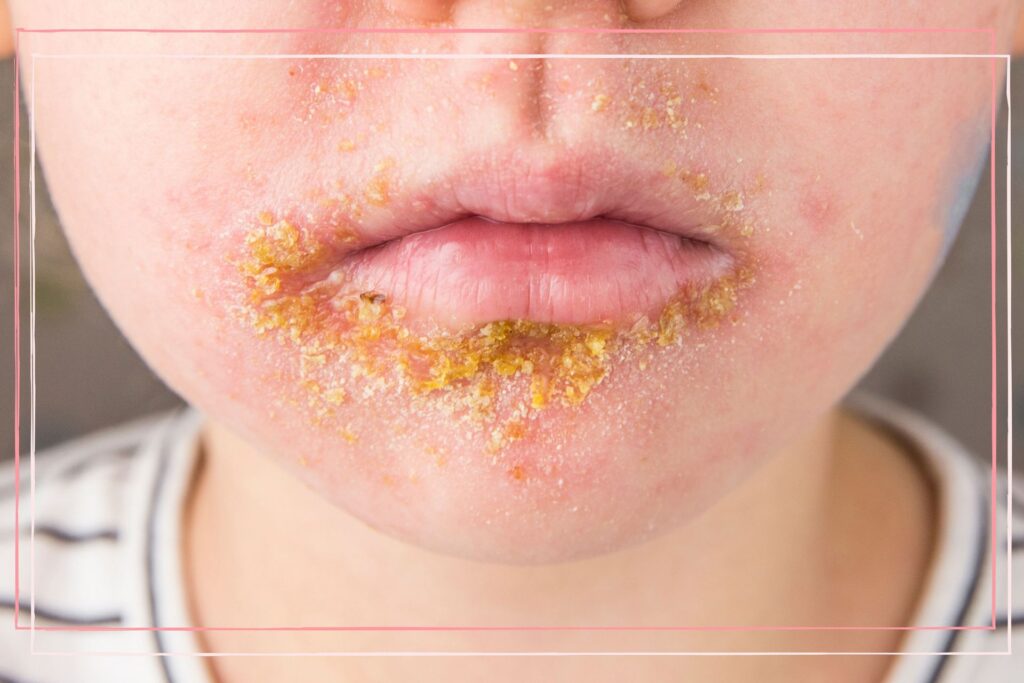
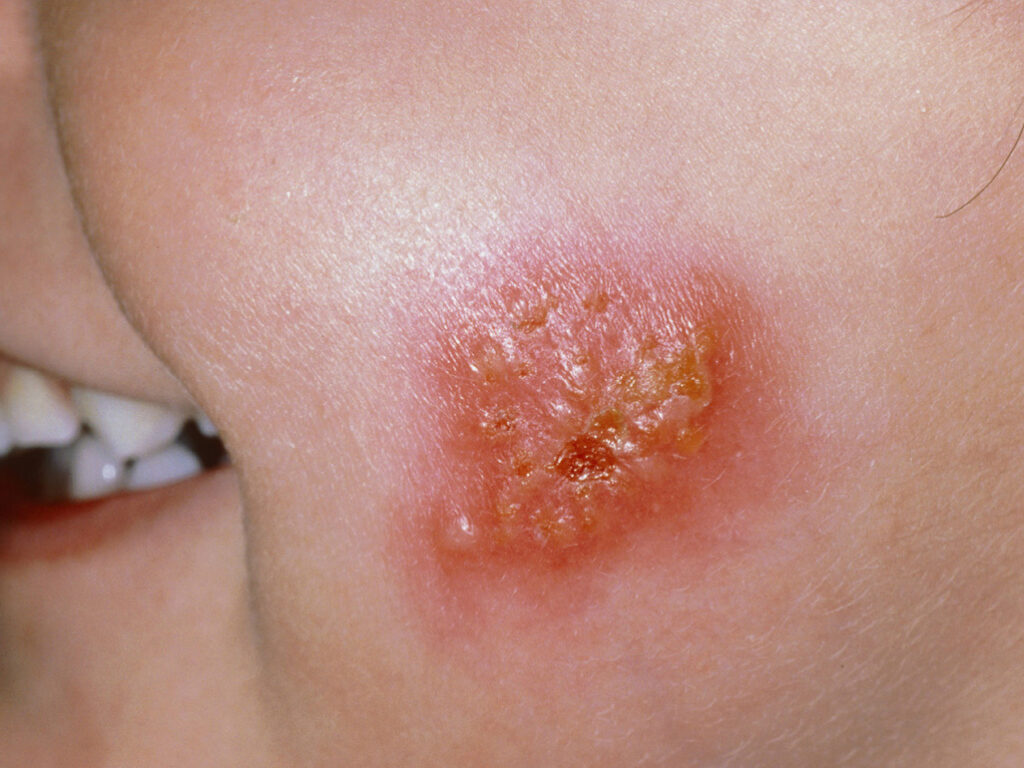
What Does Impetigo Look Like?
Classic signs include:
- Red sores or bumps
- Blisters or oozing areas
- Honey-colored crusts (very common)
- Itching or mild discomfort
Common locations:
- Around the nose
- Around the mouth
- Face
- Arms and legs
Some forms can cause larger blisters (bullous impetigo).
What Does Impetigo Look Like?
Classic signs include:
- Red sores or bumps
- Blisters or oozing areas
- Honey-colored crusts (very common)
- Itching or mild discomfort
Common locations:
- Around the nose
- Around the mouth
- Face
- Arms and legs
Some forms can cause larger blisters (bullous impetigo).
Is Impetigo Contagious?
Yes. Impetigo spreads easily through:
- Skin-to-skin contact
- Shared towels or clothing
- Scratching infected areas
Children may spread it at:
- Daycare
- School
- Sports activities
Good hygiene helps reduce spread.
How Is Impetigo Treated?
Mild cases:
- Prescription topical antibiotic ointment
More widespread cases:
- Oral antibiotics
Additional care:
- Gentle cleansing
- Keeping nails short
- Preventing scratching
Most patients improve quickly once treatment begins.
What to Expect During Recovery
- Crusting usually improves within several days
- Skin heals gradually over 1–2 weeks
- Mild temporary discoloration can occur after healing
Prompt treatment helps reduce spread and complications.
Can Impetigo Leave Scars?
Most cases heal without scarring if treated properly and not heavily scratched.
Pre-Op Instructions
(Before evaluation or treatment)
- Gently cleanse the affected area
- Avoid picking or scrubbing crusts aggressively
- Avoid sharing towels, washcloths, or razors
- Tell us if:
- Fever is present
- Redness is spreading rapidly
- The patient has eczema or immune system problems
If a culture is needed, avoid applying heavy ointments right before the visit unless instructed.
Post-Op Instructions
(After starting treatment)
What’s normal
- Mild redness while healing
- Crusting gradually loosening
- Some residual pinkness after infection clears
Aftercare
- Use medications exactly as prescribed
- Wash hands frequently
- Keep fingernails short
- Wash towels, pillowcases, and bedding regularly
- Children may need to stay home from school/daycare until treatment has started and contagiousness decreases
Call the office if
- Fever develops
- Redness spreads rapidly
- Pain worsens
- Drainage becomes severe
- No improvement occurs after several days of treatment
Frequently Asked Questions
What causes impetigo?
It is caused by bacteria entering irritated or broken skin.
Is impetigo dangerous?
Most cases are mild and treatable, but untreated infection can spread or rarely lead to complications.
How contagious is impetigo?
Very contagious, especially among children and close contacts.
Can adults get impetigo?
Yes. Although common in children, adults can develop impetigo too.
Can impetigo come back?
Yes. Recurrence can occur, especially in patients with eczema, skin picking, or frequent skin irritation.
Can I use over-the-counter creams?
Prescription treatment is usually needed for proper management.
When can children return to school or daycare?
Often after treatment has started and contagiousness decreases, but follow your physician’s recommendations and school policies.