

• Folliculitis
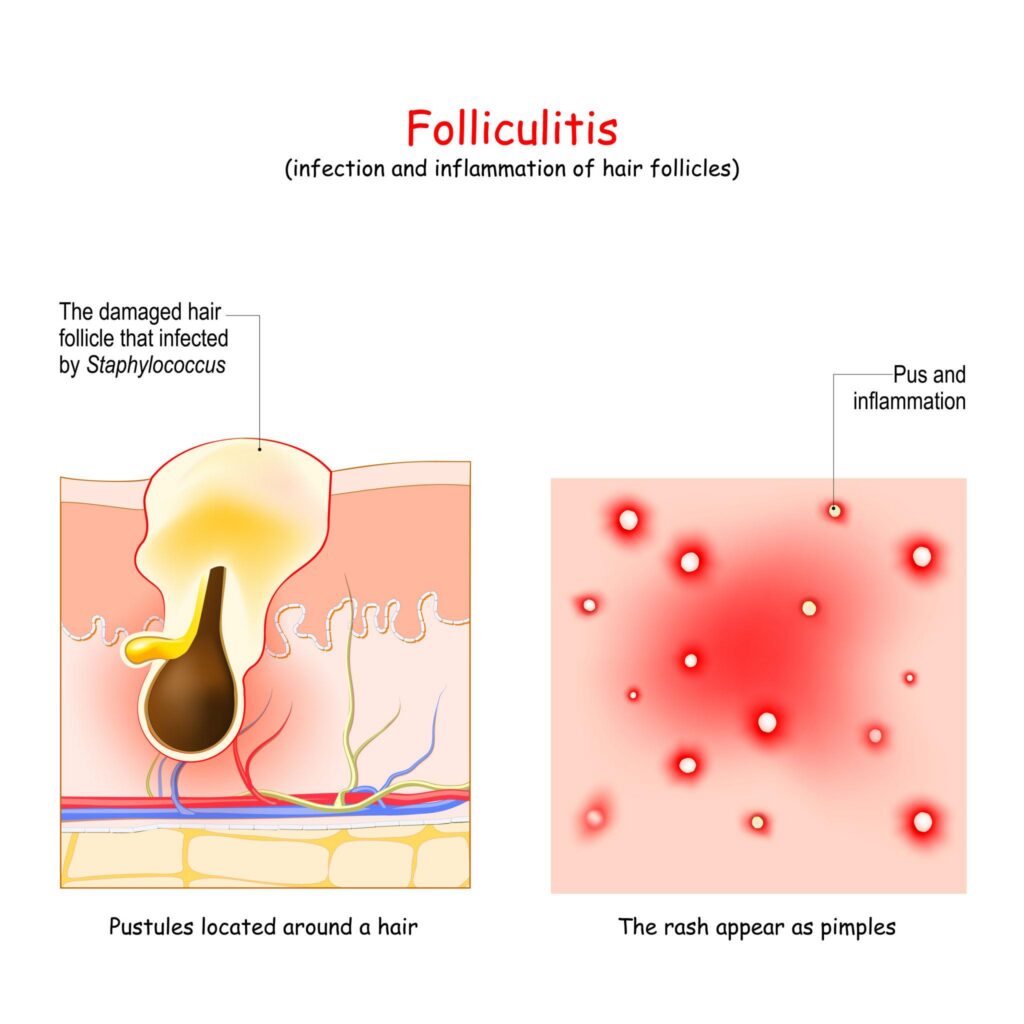
(Inflammation or infection of hair follicles causing red bumps or pimples)
What Is Folliculitis?
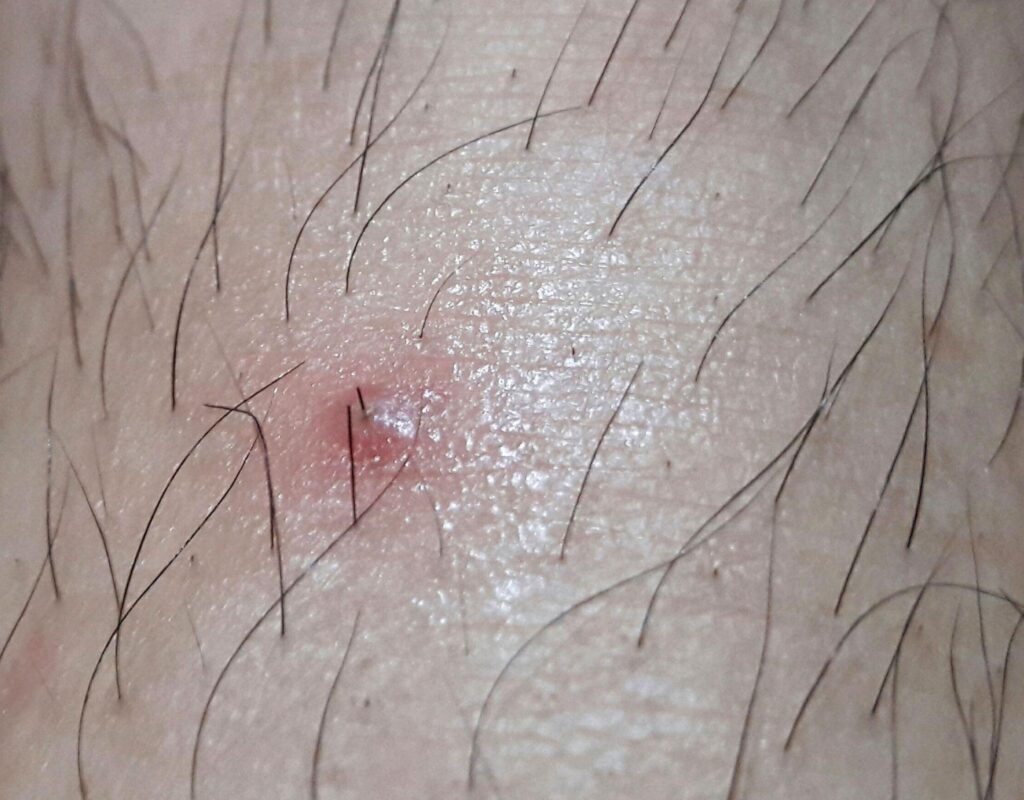
Folliculitis is inflammation or infection of the hair follicles — the tiny openings where hairs grow from the skin.
It often appears as:
- Small red bumps
- Pimples or pustules
- Tender or itchy spots around hairs
Folliculitis is very common and can occur almost anywhere hair grows.
What Causes Folliculitis?
Folliculitis can be caused by:
- Bacteria (most common)
- Friction or tight clothing
- Shaving or ingrown hairs
- Sweating and heat
- Hot tubs (“hot tub folliculitis”)
- Yeast or fungal overgrowth
- Irritating skin products
Sometimes folliculitis is not truly infected but simply inflamed.
What Does Folliculitis Look Like?
Symptoms may include:
- Red bumps around hair follicles
- Whiteheads or pus-filled bumps
- Itching or burning
- Tenderness
- Crusting in some areas
Common locations:
- Beard area
- Scalp
- Chest and back
- Buttocks
- Legs
- Underarms
Types of Folliculitis
Bacterial Folliculitis
Usually caused by staph bacteria.
Hot Tub Folliculitis
Occurs after exposure to poorly maintained hot tubs or pools.
Pseudofolliculitis (“Razor Bumps”)
Inflammation from ingrown hairs, especially after shaving.
Yeast/Fungal Folliculitis
Often itchy and commonly affects the chest or back.
Your dermatologist will determine the most likely cause and best treatment.
How Is Folliculitis Treated?
Treatment depends on severity and cause.
Common treatments include:
- Antibacterial cleansers
- Topical antibiotics
- Oral antibiotics (selected cases)
- Antifungal medications (if fungal)
- Anti-inflammatory medications
- Changes in shaving or skin care habits
Some mild cases improve with simple skin care adjustments.
Can Folliculitis Leave Scars?
Most mild cases heal without scarring.
Deeper inflammation or picking at lesions can increase the risk of:
- Dark marks
- Scarring
- Persistent bumps
Pre-Op Instructions
(Before evaluation or treatment)
- Avoid shaving irritated areas before your appointment
- Do not squeeze or pick bumps
- Tell us if:
- You recently used a hot tub
- You have diabetes or immune system conditions
- The rash keeps recurring
- You recently started new medications
Arrive with clean skin and avoid heavy ointments unless instructed.
Post-Op Instructions
(After starting treatment)
What’s normal
- Mild redness during healing
- Gradual improvement over days to weeks
- Some temporary discoloration after bumps resolve
Aftercare
- Use medications exactly as directed
- Avoid tight or irritating clothing
- Avoid shaving until the skin improves
- Wash sweaty clothing promptly
- Use gentle skin care products
Call the office if
- Redness spreads rapidly
- Pain worsens
- Fever develops
- Large boils or abscesses form
- The condition repeatedly returns
Frequently Asked Questions
Is folliculitis contagious?
Most cases are not highly contagious, though bacterial folliculitis can spread in some situations.
Is folliculitis the same as acne?
No. Folliculitis involves inflamed hair follicles and may be caused by infection or irritation, while acne involves clogged oil glands and inflammation.
Can shaving cause folliculitis?
Yes. Shaving and ingrown hairs are common triggers.
What is “hot tub folliculitis”?
It is a form of folliculitis caused by bacteria in inadequately cleaned hot tubs or pools.
Can folliculitis come back?
Yes. Some patients experience recurrent folliculitis, especially with friction, sweating, or shaving.
Should I pop the bumps?
No. Squeezing can worsen inflammation and increase scarring or infection risk.
When should I see a dermatologist?
Seek evaluation if:
- The rash is painful
- Large boils form
- It keeps recurring
- Over-the-counter treatment is not helping