

• Carbuncles
(A cluster of connected boils caused by a deeper bacterial skin infection)
What Is a Carbuncle?
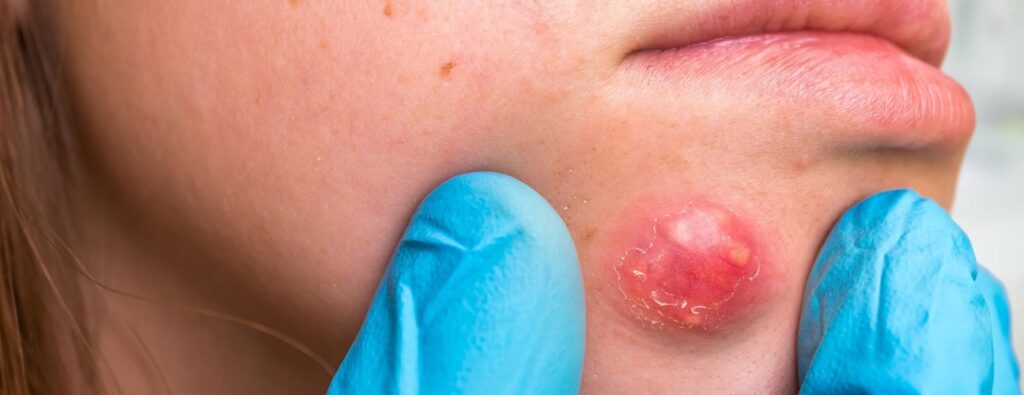
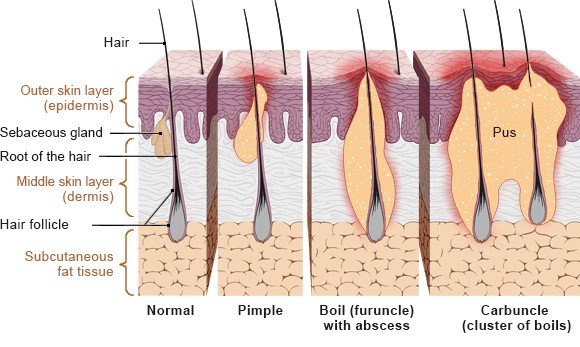
A carbuncle is a deeper bacterial skin infection made up of multiple connected boils. It usually involves several infected hair follicles that merge into a larger swollen, painful area filled with pus.
Carbuncles are most often caused by staph bacteria, including sometimes MRSA.
What Does a Carbuncle Look Like?
Common signs include:
- A large, painful, swollen lump
- Several pus points or drainage openings
- Redness and warmth around the area
- Tenderness or throbbing pain
- Fever, fatigue, or feeling unwell in more serious cases
Common locations include:
- Back of the neck
- Shoulders
- Back
- Buttocks
- Thighs
How Is a Carbuncle Different From a Boil?
A boil is usually one infected hair follicle.
A carbuncle is a cluster of connected boils and is usually larger, deeper, more painful, and more likely to need medical treatment.
How Are Carbuncles Treated?
Treatment depends on severity and may include:
- Warm compresses
- Prescription antibiotics
- Culture testing to check for MRSA
- Incision and drainage (I&D) if pus is trapped
- Wound care follow-up
Do not squeeze or cut a carbuncle at home.
Pre-Op Instructions
Before evaluation or possible drainage
- Do not squeeze, lance, or pop the area.
- Tell us if you have fever, diabetes, immune suppression, or recurrent infections.
- Tell us if you take blood thinners or have medication allergies.
- Arrive with clean skin.
- Avoid applying thick ointments right before the visit unless instructed.
Post-Op Instructions
After treatment or incision and drainage
- Keep the area clean and covered.
- Wash hands before and after wound care.
- Change dressings as directed.
- Complete antibiotics if prescribed.
- Avoid sharing towels, razors, clothing, or bedding.
- Return for follow-up if packing was placed.
Call the office promptly if:
- Fever develops or worsens
- Redness spreads
- Pain increases
- Drainage becomes foul-smelling
- New boils appear
- The wound is not improving
Frequently Asked Questions
Are carbuncles contagious?
The infection can spread through drainage or contaminated towels, clothing, or skin contact. Keep the area covered and wash hands often.
Can I treat a carbuncle at home?
Warm compresses may help early symptoms, but carbuncles often need medical care. Do not squeeze or cut it yourself.
Will I need antibiotics?
Often yes, especially if there is surrounding redness, fever, multiple lesions, or concern for Methicillin-resistant Staphylococcus aureus (MRSA).
Will I need drainage?
If there is a pus collection, incision and drainage may be needed for healing.
Can carbuncles leave scars?
Yes. Because they are deeper infections, scarring or dark marks can occur, especially if the area is squeezed or healing is delayed.
Why do I keep getting carbuncles?
Recurrent carbuncles may be related to MRSA, staph colonization, diabetes, immune factors, friction, shaving, or household spread.