Accessibility Tools

Number 6 Cosmetic Dermatology

C. Laser & Energy Devices

Number 1 Skin Cancer & Pre-Cancer Care
Number 1 Medical Dermatology
(Chronic & Inflammatory Skin Diseases)
Number 3 Pigment & Lesion Disorders
Number 4 Non-Cancer Growth
Number 5 Surgical Dermatology (Non-Cancer Procedures)
Number 6 Cosmetic Dermatology
A. Anti-wrinkle Injections
B. Dermal Fillers
  1. RHA Redensity — Fine Lines & Skin Refinement
  2. RHA 2 — Moderate Wrinkles & Smile Lines
  3. RHA 3 — Deeper Wrinkles & Lip Enhancement
  4. RHA 4 — Deep Folds, Volume & Facial Contouring
C. Laser & Energy Devices
D. Cosmetic Pigment Correction

• Narrow Band UVB and Excimer Laser

Targeted light therapy for psoriasis, vitiligo, eczema, and other inflammatory skin conditions

What Are Narrowband UVB and Excimer Laser Treatments?

Narrowband UVB phototherapy and Excimer laser therapy are medical light treatments that use specific wavelengths of ultraviolet B (UVB) light to treat certain inflammatory skin conditions.

These treatments work by:

  • Reducing skin inflammation

  • Slowing abnormal skin cell growth

  • Helping restore normal skin pigmentation in some conditions

They are commonly used in dermatology offices and are considered safe and effective when performed under medical supervision.

What Skin Conditions Can These Treatments Help?

Psoriasis
  • Red, scaly plaques caused by immune system overactivity

  • UVB light slows rapid skin cell turnover

Vitiligo
  • Loss of skin pigment

  • Light therapy can help stimulate repigmentation

Eczema / Atopic Dermatitis
  • Chronic inflammation and itching

  • UVB therapy can reduce immune activity in the skin

Other Conditions

Sometimes used for:

  • Chronic itching (pruritus)

  • Lichen planus

  • Certain inflammatory dermatoses

Your dermatologist will determine whether light therapy is appropriate for your condition.

Narrowband UVB Phototherapy

How It Works

Narrowband UVB uses a specific wavelength of ultraviolet light (around 311–313 nm) that is particularly effective for treating inflammatory skin diseases.

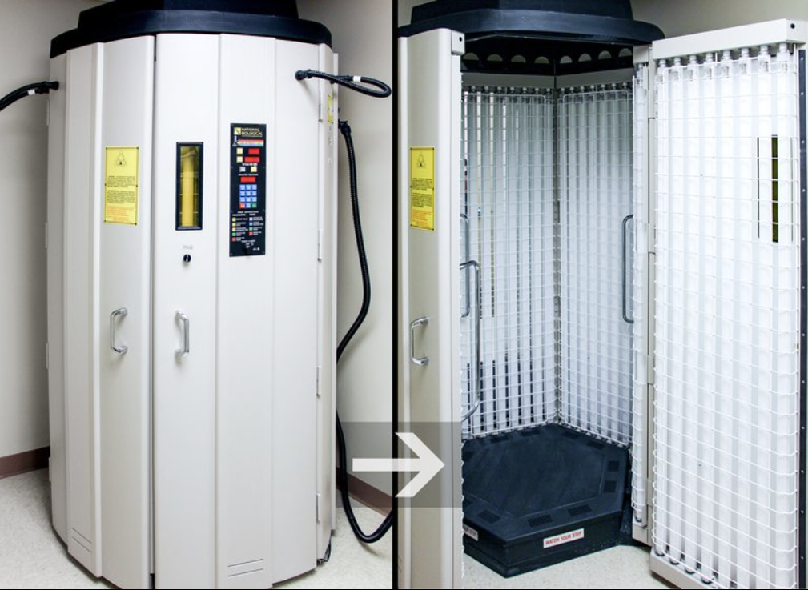
Patients typically stand inside a phototherapy light unit that exposes the skin to controlled doses of UVB.

Typical Treatment Schedule
  • Often 2–3 sessions per week

  • Treatment time usually starts at seconds to minutes

  • Gradual increase in exposure depending on skin response

Improvement usually occurs after several weeks of consistent treatment.

Excimer Laser Treatment

How It Works

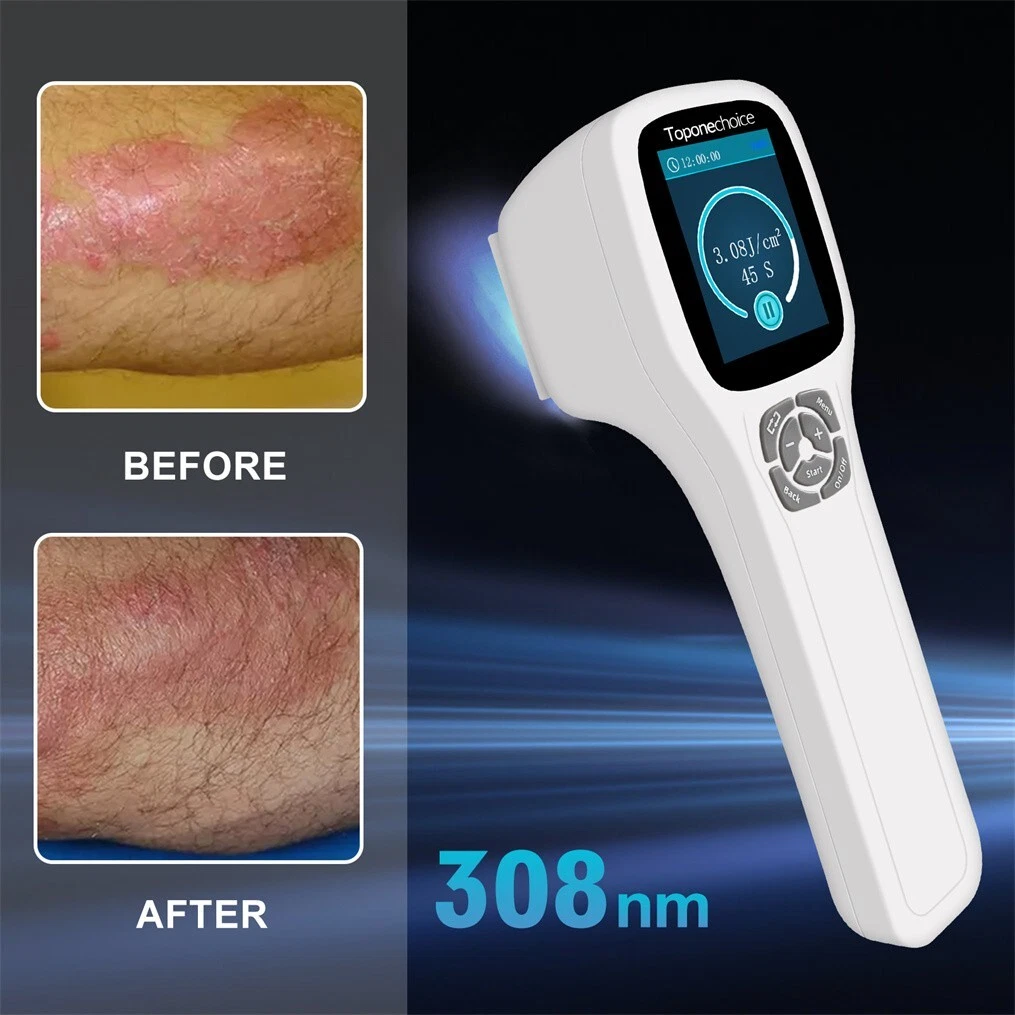
The Excimer laser (308 nm)delivers targeted UVB light directly to affected areas of skin.

Because it treats only the diseased skin, it allows for:

  • Higher intensity treatment

  • Less exposure to surrounding healthy skin

Best For
  • Localized psoriasis

  • Small vitiligo patches

  • Limited eczema plaques

Excimer treatments are typically performed once or twice weekly, depending on the treatment plan.

What to Expect During Treatment

During Narrowband UVB
  1. Protective eyewear is provided

  2. You stand inside a light therapy unit

  3. The treatment lasts seconds to minutes

  4. Sessions are repeated several times per week

During Excimer Laser
  1. The affected area is examined

  2. The laser is applied directly to lesions

  3. Treatment takes only a few minutes

  4. Multiple sessions are usually required

Most patients tolerate both treatments very well.

How Long Does Treatment Take to Work?

Improvement varies depending on the condition.

Typical timelines:

  • Psoriasis: improvement after several weeks

  • Vitiligo: repigmentation may take months

  • Eczema: itching and inflammation often improve gradually

Consistency with treatment sessions is important.

Pre-Op Instructions (Before Light Therapy)

Before treatment
  • Inform us if you take medications that increase sun sensitivity

  • Avoid tanning beds or excessive sun exposure

  • Use only skincare products recommended by your provider

  • Tell us if you:

    • Have a history of skin cancer

    • Have lupus or photosensitive disorders

    • Are pregnant

    • Recently had significant sunburn

Day of treatment
  • Arrive with clean skin

  • Avoid perfumes, lotions, or oils on treatment areas

  • Remove makeup from treated skin

Post-Op Instructions (After Light Therapy)

What’s normal
  • Mild redness similar to light sun exposure

  • Temporary warmth or dryness

  • Gradual improvement over multiple treatments

Aftercare
  • Moisturize skin regularly

  • Use broad-spectrum sunscreen

  • Avoid additional sun exposure the same day

  • Follow the treatment schedule recommended by your dermatologist

Call the office if
  • You develop blistering

  • Severe redness occurs

  • Painful skin irritation develops

Frequently Ashked Questions

Are the Narrowband UVB & Excimer Laser treatments safe?

Yes. When administered by trained professionals, phototherapy is considered a safe and well-established dermatologic treatment.

The goal is to deliver controlled light doses. Occasionally mild redness occurs, but treatments are carefully adjusted to minimize this risk.

Many patients require multiple sessions, often over several weeks or months.

It depends on the condition:

    • Excimer laser is ideal for small localized areas

    • Narrowband UVB is better for larger body areas

Your dermatologist will recommend the most appropriate option.

Some conditions such as psoriasis or eczema may flare again later. Maintenance therapy may sometimes be recommended.

Phototherapy for medical skin conditions is often covered by insurance, but coverage varies depending on the diagnosis and plan.