Accessibility Tools

Number 6 Cosmetic Dermatology

C. Laser & Energy Devices

• Vascular Laser Treatment

(Laser treatment for visible blood vessels, redness, and vascular lesions)

What Is Vascular Laser Treatment?

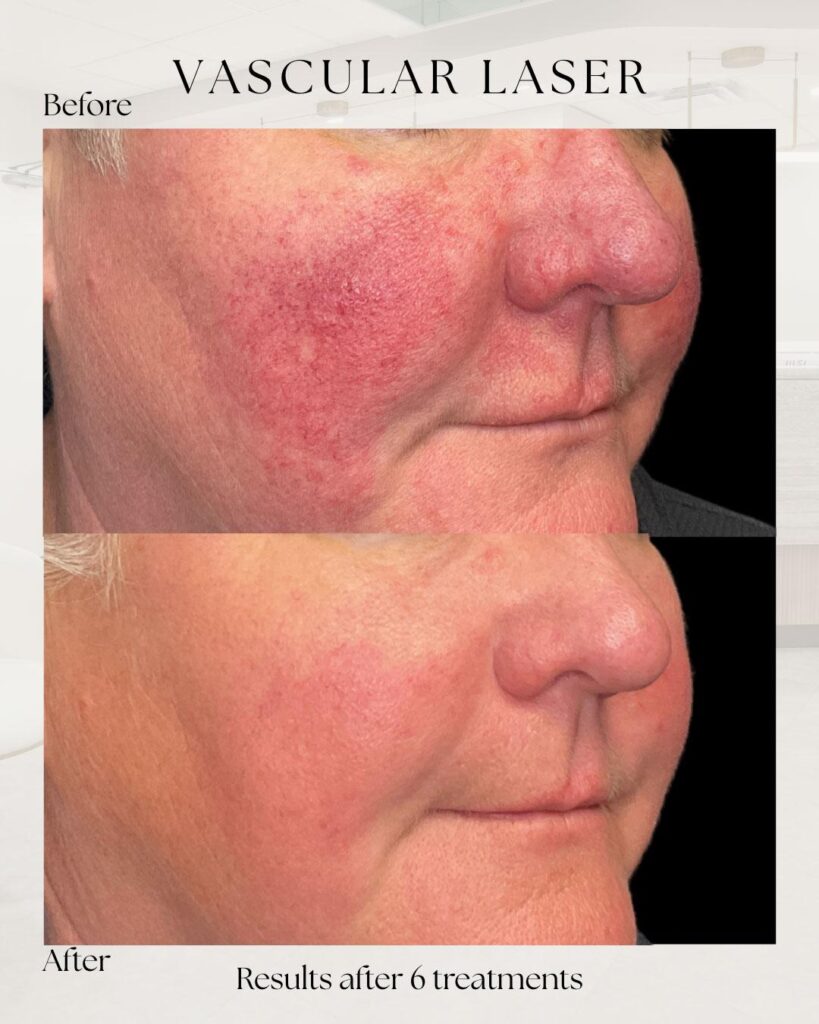
Vascular laser treatment uses targeted laser energy to treat visible blood vessels and redness in the skin. The laser selectively heats abnormal or dilated blood vessels, causing them to collapse and gradually fade, while leaving surrounding skin unharmed.

This treatment is commonly used for both medical and cosmetic vascular concerns.

What Does Vascular Laser Treat?

Vascular laser therapy may be used to improve:

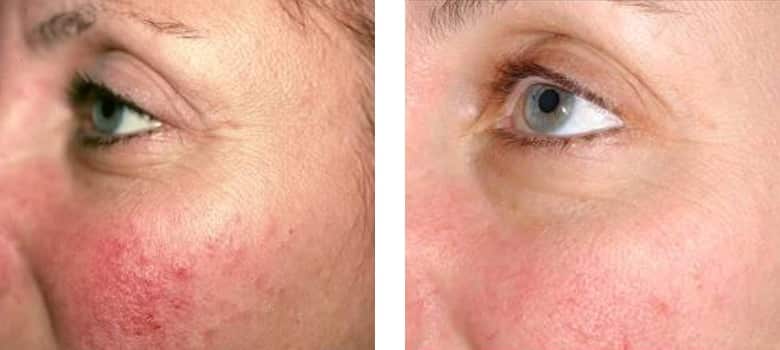
  • Broken capillaries (telangiectasias) on the face or nose

  • Facial redness and flushing (including rosacea-related redness)

  • Spider veins (small, superficial vessels)

  • Cherry angiomas

  • Venous lakes (dark blue/purple spots on lips or ears)

  • Port-wine stains and other vascular birthmarks (selected cases)

  • Post-surgical redness or persistent red scars

Your dermatologist will determine the best laser type and settings based on the size, depth, color, and location of the blood vessels.

How Vascular Laser Works (Simple Explanation)

  • The laser emits light that is absorbed by hemoglobin (the red pigment in blood)

  • Heat causes the targeted vessel to seal off

  • The body naturally reabsorbs the treated vessel over time

  • Skin tone looks clearer and more even

What to Expect During Treatment

Vascular laser treatments are performed in the office and usually take 15–30 minutes, depending on the area treated.

During your visit:

  1. The skin is cleansed

  2. Protective eye shields are placed

  3. Laser pulses are delivered to the treatment area

  4. Cooling may be used before or after treatment

  5. Soothing products are applied

Most patients describe the sensation as a quick snap or warm pinprick, similar to a rubber band.

When Will I See Results?

  • Some vessels fade immediately

  • Others darken or look bruised before fading over 1–3 weeks

  • Redness often improves gradually over several weeks

Many patients require a series of treatments (often 1–3 sessions or more) for optimal results.

Who Is a Good Candidate for Vascular Laser?

You may be a good candidate if you:

  • Have visible blood vessels or redness

  • Are able to avoid sun exposure before and after treatment

  • Understand that multiple treatments may be needed

Vascular laser may not be ideal if:

  • You have very deep or large veins

  • You are heavily tanned

  • You have certain medical conditions affecting healing

Your dermatologist will determine the safest and most effective treatment plan.

Pre-Op Instructions (Before Vascular Laser)

2–4 weeks before treatment
  • Avoid sun exposure and tanning (including self-tanner)

  • Use broad-spectrum sunscreen daily

  • Avoid tanning beds

1–2 weeks before
  • Avoid retinoids, exfoliating acids, and harsh scrubs in the treatment area (unless instructed otherwise)

  • Tell us if you:

    • Are prone to bruising

    • Have a history of post-inflammatory hyperpigmentation (PIH)

    • Are pregnant or breastfeeding

    • Have active skin infections or rashes

    • Have taken photosensitizing medications

Day of treatment
  • Arrive with clean skin (no makeup, lotion, or sunscreen on the area)

  • Avoid waxing or threading the area beforehand

Post-Op Instructions (After Vascular Laser)

What’s normal
  • Redness and mild swelling (hours to a few days)

  • Bruising or purple discoloration (especially with certain lasers)

  • Mild tenderness or warmth

Aftercare
  • Apply cool compresses if needed

  • Use gentle cleanser and moisturizer

  • Avoid picking or rubbing treated areas

  • Avoid hot showers, saunas, and strenuous exercise for 24–48 hours

  • Strict sun protection is essential while healing

Makeup
  • Makeup may usually be applied the next day (unless instructed otherwise)

Call the office if
  • You develop blistering, crusting, or increasing pain

  • You notice signs of infection (spreading redness, pus, fever)

  • Pigmentation darkens instead of gradually improving

Frequently Ashked Questions

Is vascular laser the same as IPL?

They are different. Vascular lasers target blood vessels more specifically, while IPL uses broad-spectrum light to treat both pigment and redness.

Most patients tolerate it well. Sensation is brief and improves with cooling.

Many patients need 1–3 sessions, though larger or deeper vessels may require more.

Treated vessels usually do not return, but new vessels can form over time—especially with sun exposure or rosacea. Maintenance may be recommended.

It can significantly improve redness and visible vessels, but rosacea is a chronic condition and may require ongoing management.

Yes, especially when treating certain vessels. Bruising is temporary and usually resolves within 1–2 weeks.

Coverage depends on the condition. Some vascular lesions may be considered medical, while others are cosmetic. Our office can help clarify coverage.