
 Non-Cancer Growths
 Skin Cancer & Pre-Cancer Care
 Medical Dermatology
 Pigment & Lesion Disorders
 Cosmetic Dermatology
• Cherry Angiomas (Red Moles)
1. What They Are Cherry Angiomas
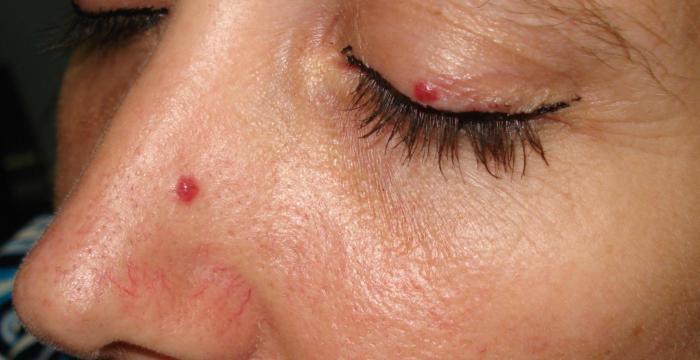
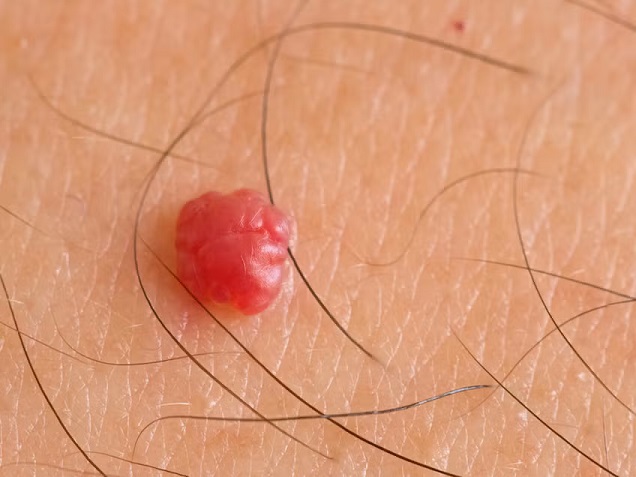
Cherry angiomas are small, bright red to purple “spots” or bumps made of tiny blood vessels near the surface of the skin. They are benign (not cancer) and extremely common—especially as we get older.
2. What do cherry angiomas look like?
Cherry angiomas can be:
Pinpoint to a few millimeters (sometimes larger)
Flat or slightly raised
Bright red, cherry-red, or purple
Found most often on the trunk (chest/back/abdomen), but can appear anywhere
They may bleed easily if scratched, shaved over, or rubbed by clothing.
When a cherry angioma looks darker
Sometimes a cherry angioma can appear dark red, purple, or even nearly black if it’s irritated or has clotted blood inside (“thrombosed”). If a spot suddenly turns dark, is growing quickly, or looks very different from your other red spots, it’s smart to have it checked.
2. Why do cherry angiomas happen?
The exact cause isn’t fully known, but cherry angiomas are commonly linked to:
Normal aging
Genetics (family tendency)
Hormonal changes (sometimes)
They are not caused by poor hygiene and usually not dangerous.
3. Do cherry angiomas need treatment?
Usually, no—treatment is optional.
People choose removal when a spot:
Bleeds often
Gets caught on clothing/jewelry
Is cosmetically bothersome
Looks atypical, and your clinician recommends removal/biopsy for reassurance
4. Treatment options (in-office)
Your dermatologist may recommend:
a) Vascular laser
A laser targets the blood vessels, causing the angioma to fade.
Often minimal downtime
May take 1–2 treatments (sometimes more for larger spots)
b) Electrocautery (tiny “touch” of heat)
A quick way to treat small raised angiomas.
Can form a small scab for several days
c) Shave removal (sometimes with cautery)
Used if the lesion is raised, frequently bleeding, or needs confirmation under the microscope.
👉 At-home removal methods aren’t recommended—they can cause infection, scarring, or significant bleeding.
5. Pre-Op Instructions (Before Removal)
If you’re monitoring only (no treatment)
No preparation needed—just mention any spots that are new, changing, bleeding, or darkening.
If you’re having laser, cautery, or shave removal
Avoid tanning/sunburn on the area for ~2 weeks (sunburned skin is harder to treat safely).
If you take blood thinners (including aspirin/NSAIDs), do not stop them unless your prescribing clinician says so. Tell your dermatology team ahead of time.
Arrive with clean skin: no makeup, lotion, or self-tanner on the area.
If you’re prone to cold sores and treating near the lips, mention it (antiviral prevention may be recommended).
6. Post-Op Instructions (After Removal)
What to expect
Laser: mild redness/swelling; the spot may darken then fade.
Cautery/shave: a small scab is common for ~5–10 days (varies by size and location).
Simple aftercare
Gently cleanse once daily with mild soap and water.
Apply a thin layer of petrolatum (Vaseline/Aquaphor) 1–2×/day until healed (unless your clinician instructs otherwise).
Don’t pick scabs—this is the most common cause of scarring.
Avoid pools/hot tubs and heavy sweating for 24–48 hours (or as directed).
Sun protection is key: use SPF 30+ and cover the area—sun can worsen dark marks while healing.
Call the office if you have:
Bleeding that doesn’t stop after 10–15 minutes of firm pressure
Increasing pain, warmth, spreading redness, pus, or fever
A wound that’s not improving over several days
Frequently Asked Questions
Are cherry angiomas cancer?
Cherry angiomas are benign and not skin cancer. Still, any spot that is new, changing, very dark, irregular, or bleeding frequently should be evaluated to confirm the diagnosis.
Do cherry angiomas go away on their own?
Most persist once they appear. Some may fade slightly, but many remain stable.
Do they mean I have a health problem?
In most people, no. They’re usually just a common skin change with age.
Why do I keep getting more?
Many people develop more over time, especially on the trunk. Genetics and aging play a role.
Do cherry angiomas bleed a lot?
They can bleed if nicked because they’re made of blood vessels. Bleeding is usually controllable with firm pressure.
Is removal painful?
Most treatments feel like a quick “snap” (laser) or brief sting (cautery). Numbing is sometimes used for shave removal or sensitive areas.
Will removal leave a scar?
Most heal very well, but any procedure can leave a small mark, especially if the area is picked or doesn’t heal well. Following aftercare and sun protection reduces risk.
Can I remove it at home?
Not recommended—there’s a real risk of bleeding, infection, and scarring.