
 Surgical Dermatology (Non-Cancer Procedures)
 Skin Cancer & Pre-Cancer Care
 Medical Dermatology
 Pigment & Lesion Disorders
 Non-Cancer Growths
 Cosmetic Dermatology
• Earlobe Repair
(Repair of torn or stretched earlobes, including split piercing holes)
What Is Earlobe Repair?
Earlobe repair is a minor in-office procedure that fixes:
Split or torn earlobes (often from heavy earrings or trauma)
Stretched piercing holes
Elongated earring holes
Gauged earlobes that you want closed or reduced
The goal is to restore a more natural earlobe shape and improve comfort and appearance.
Why Do Earlobes Split or Stretch?
Common causes include:
Long-term use of heavy earrings
Accidental pulling (children, pets, clothing, hairbrushes)
Trauma to an existing piercing
Gauges or plugs that stretch tissue over time
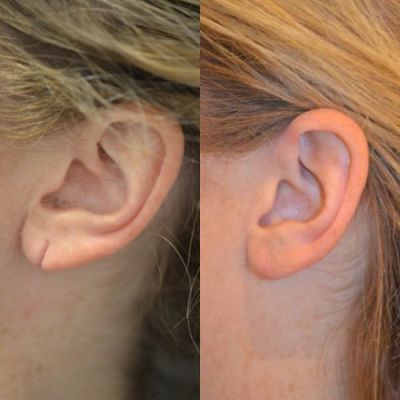
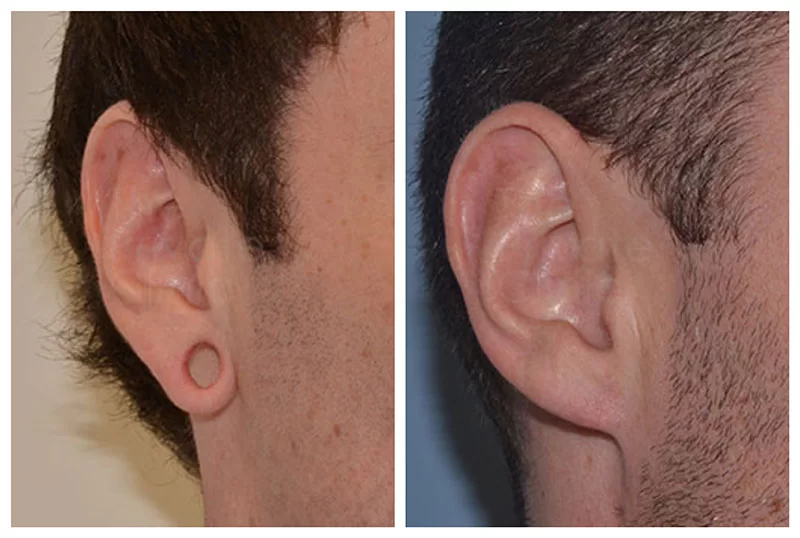
What to Expect During the Procedure
Earlobe repair is usually performed in the office with local numbing medicine.
In general:
The earlobe is cleaned and numbed
The edges of the torn or stretched area are carefully prepared
The earlobe is closed with small stitches to restore shape
A bandage is applied
Most patients feel pressure but not pain once numb.
Pre-Op Instructions (Before Earlobe Repair)
1–2 weeks before
Tell us if you take:
Blood thinners (warfarin, Eliquis, Xarelto, Plavix, etc.)
Aspirin or NSAIDs (ibuprofen, naproxen)
⚠️ Do not stop prescription blood thinners unless your prescriber instructs you.
Let us know if you have:
History of keloids or thick scarring
Allergies to adhesives, antiseptics, or numbing medicine
A history of frequent skin infections
One week before
- Stop drinking alcohol (due to blood thinning effect of alcohol)
- stop smoking
- stop fish oil supplement
- avoid optional aspirin and NSAIDS: Ibuprofen (Advil®, Motrin®), Naproxen (Aleve®), Aspirin (Bayer®), etc…
Day of procedure
Eat normally (no fasting needed)
Arrive with clean ears (no makeup, lotion, or oils on the earlobes)
Avoid wearing earrings to the appointment
If you dye your hair, try to do it before the procedure (to avoid irritation during healing)
Post-Op Instructions (After Earlobe Repair)
What’s normal
Mild swelling, tenderness, and redness for a few days
Small amount of spotting on the bandage
Itching as the skin heals
Wound care
Keep the bandage on and dry for 24 hours (unless instructed otherwise)
After 24 hours:
Clean gently with mild soap and water
Pat dry
Apply ointment if instructed
Cover with a clean bandage as directed
Avoid soaking (pools/hot tubs/baths) until healed
Activity & protection
Avoid sleeping directly on the repaired side if possible
Avoid pulling on the earlobe (be careful with hairbrushes, masks, headphones)
Do not wear earrings until cleared
Stitch removal
If non-dissolving stitches are used, removal is often around 5–10 days (timing varies)
When can I re-pierce?
Re-piercing is usually allowed only after the earlobe is fully healed—often 6–12 weeks (sometimes longer depending on your healing and scar tendency).
Re-piercing should be placed slightly away from the scar to reduce risk of re-tear.
(Your clinician will provide the exact timing for your situation.)
Call the Office If You Notice
Increasing redness, warmth, swelling, or worsening pain
Pus-like drainage, bad odor, or fever
Bleeding that doesn’t stop after 10–15 minutes of firm pressure
The incision opens or stitches loosen
Frequently Asked Questions
Does earlobe repair hurt?
You may feel a brief pinch/burn from the numbing injection. After that, most patients feel pressure but no sharp pain.
Will there be a scar?
Yes, a small scar is expected. We use fine stitches and provide aftercare instructions to help the scar heal as smoothly as possible.
Can you fix a completely split earlobe?
Yes—most split earlobes can be repaired. The exact technique depends on how the tear looks and whether there is missing tissue.
Can you repair stretched gauge holes?
Often, yes. The approach depends on how stretched the tissue is and your goal (close completely vs reduce size).
How long does the procedure take?
Many earlobe repairs take about 30–60 minutes, depending on whether one or both earlobes are repaired.
When can I wear earrings again?
You should not wear earrings until your clinician clears you. Re-piercing is typically delayed until full healing.
What if my earlobe tears again?
Re-tears can happen, especially if heavy earrings are worn or if re-piercing is too close to the scar. We’ll guide safe re-piercing placement and earring choices.