
 Non-Cancer Growths
 Skin Cancer & Pre-Cancer Care
 Medical Dermatology
 Pigment & Lesion Disorders
 Cosmetic Dermatology
• Cysts (Skin Cysts)
Skin cysts are common, usually harmless “lumps” under the skin. Many are slow-growing and painless, but they can become irritated, inflamed, or occasionally infected. The good news: most cysts are straightforward to evaluate and, if needed, remove in the office.
What is a cyst?
A cyst is a sac-like pocket under the skin that contains material such as keratin (a protein found in skin, hair, and nails) or fluid. Many cysts on the skin are benign (not cancer).
Cyst types we see in dermatology
Epidermoid (epidermal inclusion) cyst: Often on face, neck, trunk, or back; may have a visible central pore (“punctum”).
Pilar (trichilemmal) cyst: Most often on the scalp, arising from hair follicles; frequently runs in families.
- Steatocystoma (less common): a rare, noncancerous (benign) cyst that originates from the sebaceous glands (oil glands) in the skin.
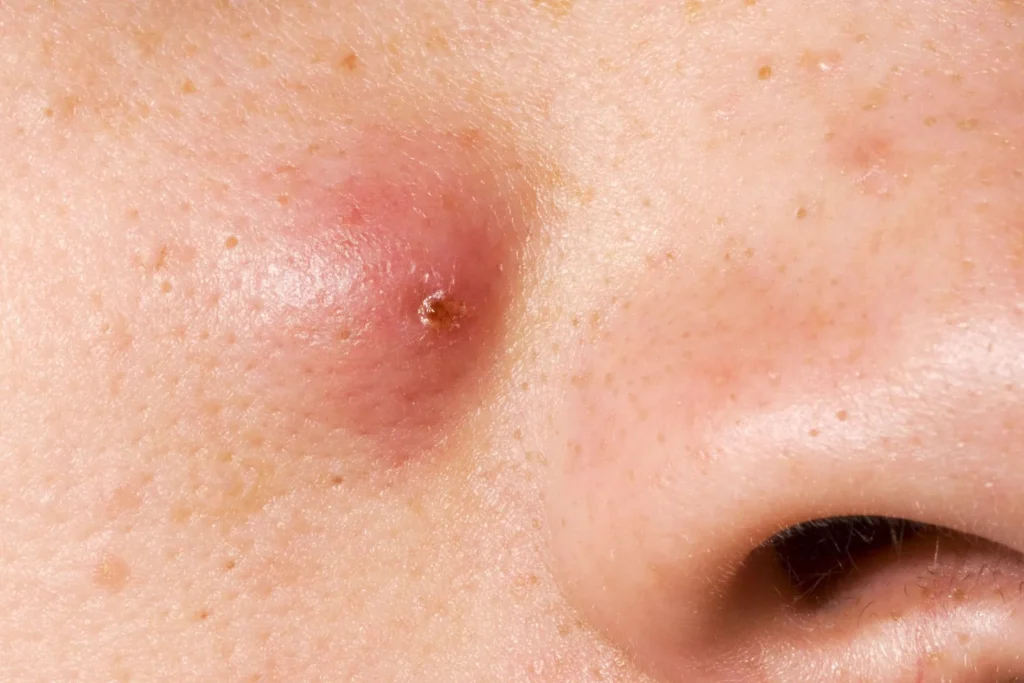
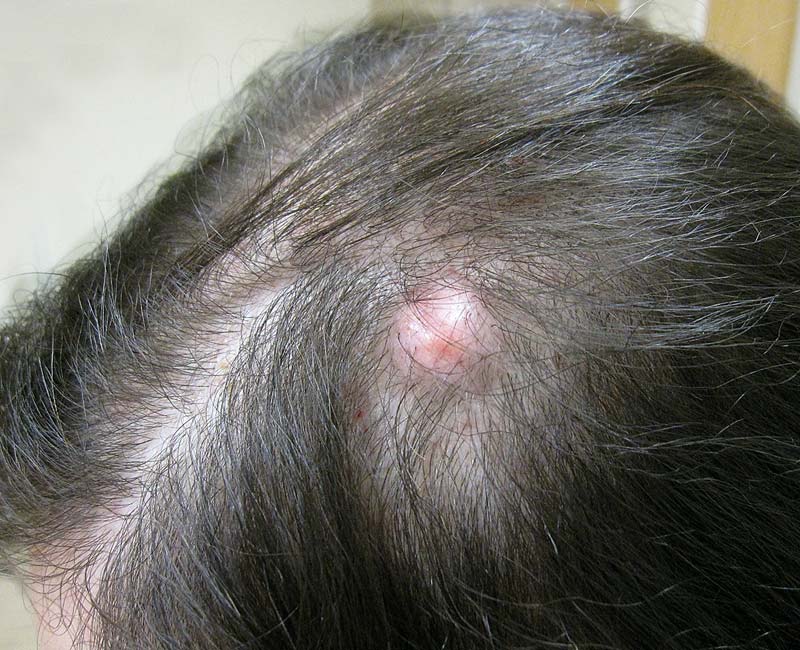
What does a cyst feel/look like?
Many cysts are:
Round, smooth, and movable under the skin
Skin-colored or slightly yellow/white
Painless unless inflamed
When irritated or inflamed, a cyst can become:
Red, tender, swollen, or warm
Draining a thick, “cheesy” material (keratin)
When should I have a cyst checked?
Make an appointment if:
It’s new, growing, painful, or changing quickly
It becomes red/hot, drains pus, or you develop fever
It’s in a sensitive area (face, genitals) or keeps coming back
You’re unsure whether it’s a cyst or something else
5. How are cysts diagnosed?
- Often, your clinician can diagnose a cyst by exam.
- If something looks atypical, a cyst is recurrent, or there’s uncertainty, we may recommend removal
- and (sometimes) lab evaluation of the tissue.
Treatment options
Not every cyst needs treatment. Options depend on symptoms, location, and whether it’s inflamed.
👉 Important: Don’t try to pop or cut a cyst at home—this increases inflammation, infection risk, scarring, and recurrence.
a) Observe (no treatment)
Small, quiet cysts often don’t require treatment.
b) Reduce inflammation
Warm compresses can help soothe discomfort in some cases.
Steroid injection may calm swelling and tenderness for an inflamed cyst.
c) Drainage (incision & drainage)
If a cyst is very tender or swollen, your clinician may open and drain it for relief. Keep in mind: drainage can help symptoms, but the cyst can return if the cyst lining remains.
d) Definitive removal (excision)
Complete surgical excision removes the cyst and its capsule (the “wall”), which is the best way to reduce recurrence. Excision is often easiest when the cyst is not acutely inflamed.
Pre-Op Instructions (Cyst Removal / Excision)
These are general guidelines. Your clinician may adjust them based on the cyst location, size, and your medical history.
1–2 weeks before (if applicable)
Tell us if you take blood thinners (including aspirin, clopidogrel, warfarin, DOACs like apixaban/rivaroxaban) or supplements that increase bruising (fish oil, vitamin E, ginkgo). Do not stop medications unless your prescribing clinician says it’s safe.
Let us know if you have:
A pacemaker/defibrillator
Joint replacement history
Bleeding disorders
Allergies to local anesthetics, antibiotics, tape, or adhesives
24–48 hours before
Avoid tanning/sunburn on the area.
If the cyst is inflamed or draining, call us—sometimes we treat inflammation first and schedule excision later.
Day of procedure
Eat normally unless instructed otherwise (most cyst removals use local anesthetic only).
Shower and arrive with clean skin; avoid heavy lotions on the site.
Wear comfortable clothing that allows easy access to the area.
Plan on 30–60 minutes in the office (varies by size/location).
Post-Op Instructions (After Cyst Removal)
What to expect
Mild soreness, swelling, bruising, and a small amount of spotting are common for the first 24–48 hours.
If stitches are placed, we’ll tell you when they need to be removed (often 7–14 days, depending on location).
Wound care basics
Keep the bandage on and the area dry for the first 24 hours (unless your clinician advises otherwise).
After 24 hours:
Gently wash with mild soap and water
Pat dry
Apply a thin layer of petrolatum (or the ointment we recommend)
Cover with a clean bandage daily until healed
Activity
Avoid heavy lifting, vigorous exercise, and stretching the area for 3–7 days (or longer if on the back/shoulders/legs) to reduce bleeding and protect stitches.
Pain control
Use the pain plan your clinician recommends.
Avoid medications that your clinician told you to avoid around the time of surgery.
Call us urgently if you notice
Bleeding that won’t stop after 20 minutes of firm pressure
Rapidly increasing redness, warmth, swelling, pus, fever, or worsening pain
The wound edges separate or the bandage becomes soaked repeatedly
Schedule an Evaluation
Call the office if your cyst is rapidly enlarging, very painful, red/hot, draining pus, associated with fever, or if you have a new lump that doesn’t improve within a couple of weeks.
Frequently Asked Questions
Are cysts cancer?
Most skin cysts are benign (noncancerous). Rarely, a lump that looks like a “cyst” can be something else—so it’s smart to have new or changing growths evaluated.
Can I pop a cyst?
No. Squeezing or puncturing a cyst often makes it more inflamed, increases infection risk, and can lead to scarring and recurrence.
Why did my cyst suddenly get red and painful?
Many red, swollen cysts are inflamed rather than infected. Treatment may include drainage or a steroid injection; antibiotics are only needed when true infection is present.
Will it come back after treatment?
- Drainage can relieve symptoms but cysts can recur.
- omplete excision (removing the capsule) offers the best chance to prevent recurrence.
Will I have a scar?
Any procedure that cuts the skin can leave a scar. We use techniques to keep scars as small and neat as possible, and we’ll discuss scar care after your procedure.
Do you send cysts to the lab?
Often, yes—especially if the diagnosis isn’t perfectly clear, the cyst is atypical, or it’s removed surgically.
Can a cyst go away on its own
Some cysts may stay the same for years; others may shrink or calm down. If it’s growing, painful, or bothersome, evaluation is recommended.
What’s the difference between a cyst and a boil?
A boil is usually an infection of a hair follicle. A cyst is typically a keratin-filled sac under the skin that can become inflamed (and sometimes infected). If you’re not sure, we can examine it.