

• Pityriasis Rosea
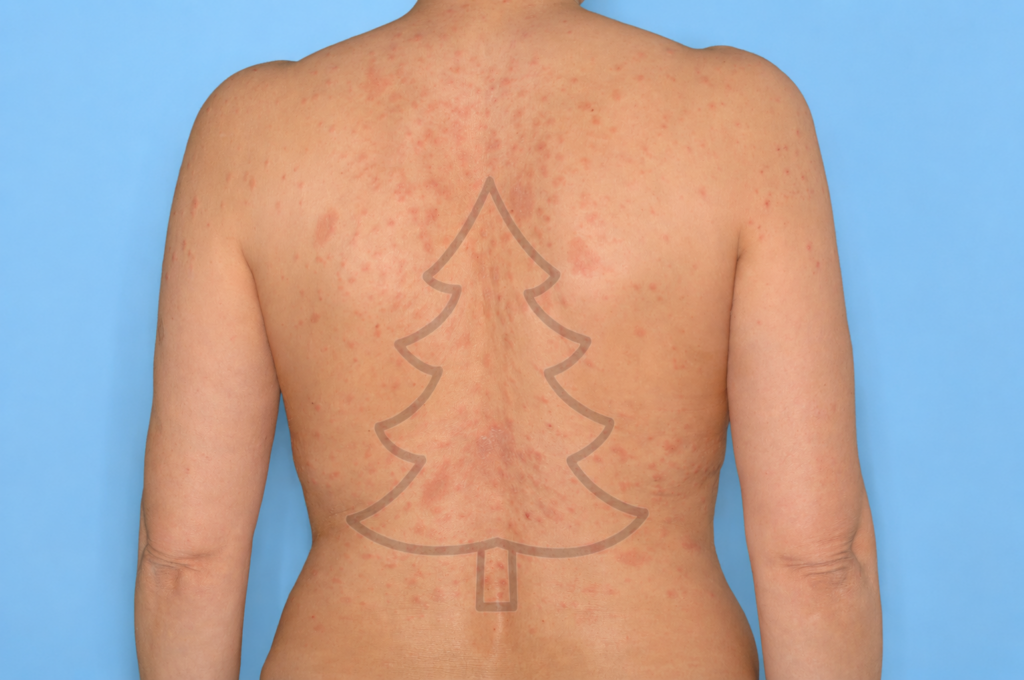
(An oval, scaly rash that often forms a “Christmas tree” pattern)
What Is Pityriasis Rosea?
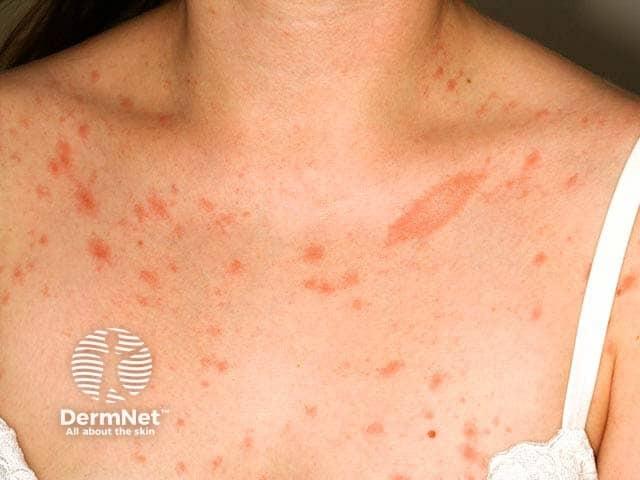
Pityriasis rosea is a common, harmless inflammatory rash that usually clears on its own. It often starts with one larger oval patch called a “herald patch,” followed days to weeks later by smaller oval, scaly spots on the chest, abdomen, back, arms, or thighs. The rash often resolves in about 6–10 weeks.
What Does It Look Like?
Typical features include:
One larger oval patch first, called the herald patch
Multiple smaller oval pink, red, tan, or darker patches
Fine scale around the edges
A pattern on the back that may look like a Christmas tree
Mild to moderate itching in some patients
Is It Contagious?
Pityriasis rosea is generally considered not contagious. It is not caused by poor hygiene and is not a fungal infection, although it can sometimes look similar to ringworm.
How Is It Diagnosed?
Diagnosis is usually made by a dermatologist through a skin exam. If the rash is unusual, persistent, or unclear, your dermatologist may consider testing to rule out conditions such as fungal infection, eczema, psoriasis, medication reactions, or syphilis.
Treatment Options
Most cases do not need aggressive treatment because the rash usually goes away on its own. Treatment focuses on comfort:
Gentle moisturizers
Mild topical steroid creams for itching
Oral antihistamines for itch relief
Avoiding harsh soaps and hot showers
Phototherapy in selected severe or persistent cases
Pre-Op Instructions
(No surgery is usually needed — these are “before your visit” tips.)
Take photos if the rash is changing quickly.
Avoid applying heavy creams, oils, or makeup over the rash before your visit.
Bring a list of new medications, supplements, or recent illnesses.
Tell your dermatologist if you are pregnant, because rash evaluation during pregnancy may need closer attention.
Let us know if the rash involves palms, soles, mouth, genitals, or is painful.
Post-Op Instructions
(After diagnosis or starting treatment)
Use medications exactly as directed.
Keep skin moisturized with fragrance-free products.
Avoid scratching, hot showers, harsh soaps, and exfoliating scrubs.
Wear loose, breathable clothing.
Call the office if the rash worsens, becomes painful, blisters, drains pus, or lasts longer than expected.
Frequently Asked Questions
Is pityriasis rosea dangerous?
Usually no. It is generally harmless and self-limited.
How long does it last?
Most cases clear in about 6–10 weeks, though some last longer.
Is it ringworm?
No. Pityriasis rosea is not a fungal infection, but the herald patch can resemble ringworm, so evaluation may be needed.
Can it itch?
Yes. Some patients have mild itching, while others have more intense itching.
Will it leave scars?
It usually does not scar. Temporary lighter or darker marks may remain after the rash fades, especially in deeper skin tones.
Can it come back?
Recurrence is uncommon, but it can happen.
When should I see a dermatologist?
Schedule a visit if the rash is widespread, very itchy, painful, unusual, involves palms/soles, or does not improve over time.
Your dermatologist may consider testing to rule out conditions such as fungal infection, eczema, psoriasis, medication reactions, or syphilis.